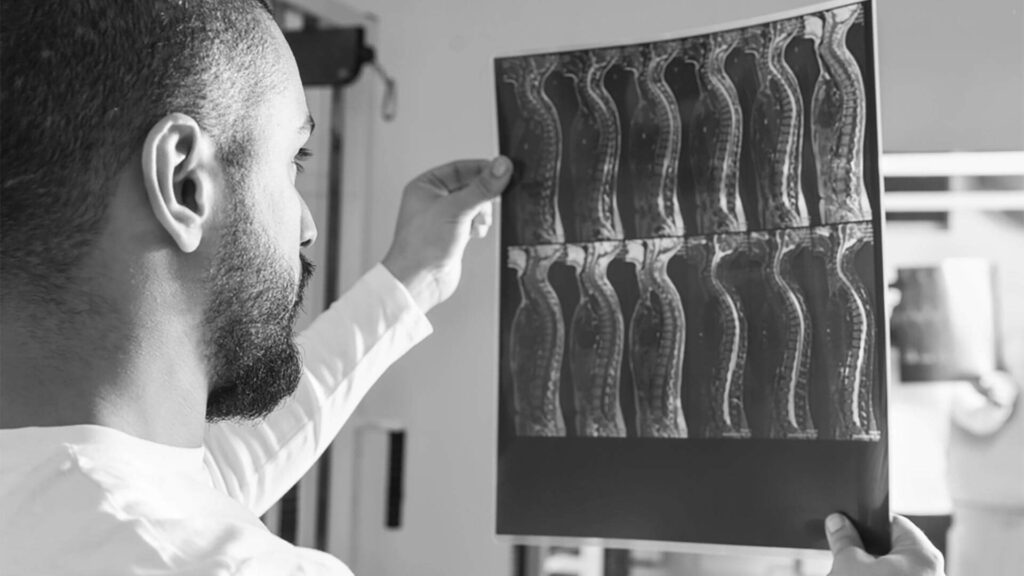
Blunt force head trauma describes an injury caused by impact or force rather than by something penetrating, the kind that happens in a crash, a fall, a workplace or sports impact, or an assault. “Blunt” refers to the mechanism, not to how much damage was done: a blunt impact can still cause a scalp laceration, a skull fracture, or bleeding inside the head. The phrase shows up on emergency room discharge papers, EMS run sheets, and police reports, and it is frightening precisely because it sounds severe but explains almost nothing about how serious the injury actually is. This page is written for the person trying to answer two questions at once: how bad is this, for me or for someone I am caring for, and if someone else caused it, does any of this matter for a claim.
What You Need to Know
- A “blunt force” label describes the mechanism, not the severity. The same phrase covers a minor scalp bruise and a life threatening brain bleed. What matters is the symptoms and how they change over the next hours and days.
- Some of the most dangerous head injuries have a delay. A person can feel fine right after the blow and then deteriorate. Certain warning signs mean call 911 now, not in the morning.
- Feeling okay is not proof you are okay, and a normal scan does not rule out a brain injury. A concussion commonly shows nothing on a standard CT. MRI is more sensitive than CT for some subtle findings, including diffuse axonal injury, but no scan detects everything.
- If you already told the paramedics you were fine, talked to an adjuster, or missed a follow up, you have not necessarily damaged anything, but there are specific things to watch for and stop doing.
- A pre-existing condition does not end a Nevada claim. Under the eggshell plaintiff rule, a defendant is responsible for the harm they caused, even to someone who was more fragile to begin with.
- In Nevada, the deadline to file most injury claims is two years from the injury. Evidence, though, starts disappearing long before that.
Below is the plain version of each point, starting with the one that cannot wait.
When a Head Injury Is a Medical Emergency
Some symptoms after a blow to the head mean the brain may be bleeding or swelling, and they call for immediate emergency care. According to Mayo Clinic and MedlinePlus, call 911 or get to an emergency room right away if you or the injured person has any of the following after a head impact:
- Repeated vomiting (more than once), or a headache that keeps getting worse
- Trouble waking up, or increasing drowsiness or confusion (any loss of consciousness after a head impact also warrants prompt medical assessment; call emergency services if the person cannot be woken, is getting worse, or has another danger sign here)
- A seizure or convulsion
- Confusion, agitation, slurred speech, or behavior that is not normal for them
- Weakness or numbness in an arm or leg, especially on one side
- Unequal or enlarged pupils, new vision problems, or loss of balance and coordination
- Clear fluid or blood draining from the nose or ears, or bruising around both eyes or behind the ears
These signs call for urgent evaluation. They do not diagnose anything by themselves, but they are the ones that should not wait. When the mechanism was high energy (a car or motorcycle crash, a fall from height, a hard assault), or the person is older, very young, or taking blood thinners, the threshold to get checked should be even lower, because those factors raise the risk that a “minor” hit is not minor.
Follow the discharge instructions you were given. They are the controlling advice, not anything on this page. Head injury discharge plans often ask a responsible adult to observe the patient for a period, because deterioration can be delayed and the injured person may not reliably report it. If clinicians asked for observation, arrange it for the time they specified. If new red flag symptoms appear, treat it as an emergency and go back.
This is not a diagnosis and it is not a substitute for a doctor. If anything about a head injury worries you, the safe move is to be evaluated. Getting checked is not overreacting.
Why “I Felt Fine” and “The Scan Was Normal” Are the Two Riskiest Assumptions
The two beliefs that most often lead people to walk away from both care and a legitimate claim are that feeling okay means they are okay, and that a clean scan means nothing is wrong. Both are medically incorrect, and both are worth understanding before you accept them.
Symptoms can be delayed. With bleeding inside the skull, symptoms “may develop right after a head injury, or they may take weeks or longer to appear,” according to Mayo Clinic. One pattern worth knowing about is the lucid interval: a person is knocked out or dazed, then wakes up and seems normal, then declines as a blood clot grows and presses on the brain. It is classically associated with an epidural hematoma (bleeding between the skull and the brain’s outer covering). The practical lesson is not to wait for any particular sequence: this pattern is not reliable enough to plan around, and the danger signs above are what should drive the decision to get care. Concussion symptoms can also emerge or worsen in the hours and days after an impact, which is why headache, fog, irritability, dizziness, and sleep problems can surface late, though a concussion is not simply a slower version of an expanding blood clot.
A normal scan does not rule out a brain injury. A CT scan in the emergency room is designed to catch the things that need urgent treatment, such as bleeding, a fracture, or swelling, and a normal CT does meaningfully reduce concern about those specific emergencies. What it is not built to detect is the microscopic, spread-out damage of a concussion. MRI is a different tool: it is more sensitive than CT for some subtle traumatic findings, including diffuse axonal injury, which is one reason it may be ordered later even after a clean CT. Neither test detects everything, and concussion in particular commonly shows normal structural imaging. As the American Society of Neuroradiology explains, “TBI is a clinical diagnosis; no single test is able to definitively confirm the diagnosis of TBI,” and even MRI can miss injury that is below its resolution. A National Institutes of Health review puts it plainly: standard CT and MRI are “somewhat insensitive measures of mild TBI and often yield a normal reading,” even while a patient stays symptomatic for months (NIH/PMC).
Put together, these two facts are why a person can genuinely be hurt while feeling fine and while their scan looks clean. That is also exactly the gap an insurer will use, which is why the medical picture and the legal picture are connected.
The Main Types of Blunt Force Head Injury
“Blunt force head trauma” is a category, not a diagnosis. It spans injuries to the scalp and skull and injuries to the brain itself. The table below outlines the main types recognized in medical references such as StatPearls (NCBI) and the Mayfield Clinic.
| Injury | What it is |
|---|---|
| Scalp injury | A cut, scrape, bruise, or swelling of the skin over the skull. Often looks dramatic (scalps bleed heavily) without brain injury. |
| Skull fracture | A break in the skull bone. A fracture at the base of the skull can leak clear fluid or blood from the nose or ears. |
| Concussion (mild TBI) | A temporary disruption of brain function from the brain being shaken or moving inside the skull. The most common traumatic brain injury. |
| Cerebral contusion | A bruise to a specific area of brain tissue from the impact (a “coup” injury under the blow, a “contrecoup” injury on the opposite side). |
| Diffuse axonal injury (DAI) | Widespread stretching and shearing of nerve fibers when the brain rapidly rotates. Often invisible on routine scans, yet can be serious. |
| Intracranial hemorrhage or hematoma | Bleeding in or around the brain: epidural (between skull and dura), subdural (under the dura), subarachnoid (over the brain surface), or within the brain tissue. |
The reason the category matters more than the label is that the same words on a discharge sheet can mean a scalp bruise or a brain bleed. What sorts one from the other is not the phrase, it is the symptoms and how they behave over time.
What this means for you: if you have the paperwork but do not understand it, the useful next step is not to decode the term, it is to track how the symptoms change and to keep every record. The record is what a doctor, and later a lawyer, will actually rely on.
Can a Brain Injury Be Proven When the Scans Don’t Show It?
Whether an “invisible” brain injury can be proven comes down to the record, not a single picture. Concussion is a clinical diagnosis, established through the history of how the injury happened, the pattern and course of symptoms, and a neurological examination. Diffuse axonal injury is a different thing and is not interchangeable with concussion; MRI findings can help identify it. Neuropsychological testing, which measures memory, attention, and processing speed, can characterize the cognitive effects of an injury, but it is selected case by case and does not by itself establish either diagnosis or its cause. Consistent treatment and a documented change in day to day functioning carry real weight.
A word of caution about the imaging that gets marketed as proof. Advanced scans such as diffusion tensor imaging (DTI) are promising research tools, but major radiology bodies still classify them as investigational. The Radiological Society of North America states there is “insufficient evidence” to support their routine use for diagnosing an individual patient’s TBI, and their weight in a courtroom is frequently contested. Treat a normal standard scan as the start of the inquiry, not the end of it, and be skeptical of any single test sold as the whole answer.
Here is where medicine and law diverge in a way that helps you. Legal causation is not the same as a doctor’s diagnosis. Under Nevada’s civil jury instructions, a “legal cause” is a cause that is “a substantial factor in bringing about the injury,” and it “does not have to be the only cause of the harm” (Nev. J.I. 4.04A). A doctor’s opinion is evidence a jury weighs; it is not the legal test itself. So the fact that no scan lit up does not, by itself, defeat causation. What matters legally is whether the crash or fall or assault was a substantial factor in the harm.
Will a Pre-Existing Condition End the Claim? The Eggshell Rule
One of the most common reasons people talk themselves out of a claim is a prior condition: an old concussion, migraines, ADHD, depression, age, or a degenerative problem. Insurers lean on this hard, arguing that the pre-existing condition, not the incident, explains the symptoms. Nevada law answers that argument directly through the eggshell plaintiff rule (sometimes called the thin skull rule): a defendant takes the injured person as they find them.
Nevada’s pattern jury instruction on aggravation of a pre-existing condition says a person is entitled to recover for “any aggravation” of a pre-existing condition caused by the injury, and that this is true “even if the person’s condition or disability made them more susceptible to the possibility of ill effects than a normally healthy person would have been, and even if a normally healthy person probably would not have suffered any substantial injury” (Nev. J.I. 5.3). In plainer terms: if a blow to the head makes an existing condition worse, the responsible party owes for that worsening.
There is a limit worth understanding so the rule is not oversold. The damages are for the aggravation, the additional harm the incident caused, not for the baseline condition that existed anyway. A person with prior migraines does not recover for migraines they would have had regardless; they recover for the way the injury made things worse. That distinction is usually a medical documentation question, which loops back to why the record built early matters so much.
What this means for you: a prior injury is a reason to be careful with documentation, not a reason to assume you have no claim. The eggshell rule exists precisely because people are not all equally sturdy, and the law does not reward whoever caused the harm for having hit someone who was already vulnerable.
Did You Already Hurt Your Case?
If you have already spoken to an insurance adjuster, told the paramedics you felt fine, or gone a few days without seeing a doctor, you most likely have not ruined anything. What matters is understanding a few moves that quietly reduce the value of a real injury, so you can stop making them.
- Recorded statements are evidence gathering, not a welfare check. A friendly call within a day or two, asking how you are feeling and what happened, is designed to lock in answers. You are not required to give a recorded statement to the at-fault party’s insurer, and doing so while you are still confused or symptomatic works against you.
- Quick settlement offers come before anyone knows how bad it is. A fast offer with a broad release can close the door on future medical costs, which is a serious problem when a head injury’s full picture takes weeks or months to emerge.
- Gaps in treatment get used against you. When someone feels “mostly fine” and skips follow ups, an insurer later argues the injury was trivial. Following medical advice and keeping appointments protects both your health and the record.
- Evidence disappears on its own. Video overwrites, vehicles get repaired, and witnesses forget. Preserving what you can, early, matters more than the filing deadline that is still years away.
For a head injury specifically, one more factor changes the playbook. A traumatic brain injury, especially one affecting the frontal areas of the brain, can impair a person’s insight and judgment, so the injured person may sincerely insist they are fine while not recognizing their own deficits. That is why, as Mayo Clinic notes, family observation is often essential. If you are the spouse, parent, or adult child watching this happen, you are the safety monitor and, later, the person who can describe the before and after that no scan captures. Writing down what you notice (repeated questions, personality changes, missed work, sleep changes) is genuinely useful, both medically and legally.
What Drives the Value of a Head-Injury Claim
The value of a serious head-injury claim is not really about the emergency room bill. It is about what the injury changes going forward. The main drivers include future medical and rehabilitation needs, any long-term or lifetime care a severe injury requires, lost earning capacity when cognitive changes affect the ability to work, and the human cost of the changes themselves. Where the injury aggravated a pre-existing condition, the value tracks the incremental harm, as described above.
These are the levers that make brain and catastrophic-injury cases different from ordinary ones, and they are handled in depth on the pages built for them: the firm’s Las Vegas brain injury and catastrophic injury practice pages, along with guides on what counts as a catastrophic injury, the difference between a catastrophic and an ordinary injury case, how acute and chronic injuries are treated in a claim, and, when a brain injury reshapes a marriage, traumatic brain injury and loss of consortium.
A note on prognosis, because both extremes get overstated. According to the CDC, most people improve within days or weeks, while some have symptoms that last for months or longer. Published estimates of how many fall into that second group vary widely depending on which patients were studied, how “persistent symptoms” was defined, and how long they were followed, so a single percentage is not worth relying on. Studies have associated slower recovery with older age, prior concussions, a heavy early symptom burden, and pre-existing anxiety, depression, or chronic pain, though none of those factors determines any individual outcome. No one can promise an outcome in either direction, which is exactly why the record and the medical follow-up matter.
What to Do Next
Two tracks run in parallel after a head injury, one medical and one that protects your options.
On the medical side: treat red flag symptoms as an emergency, get evaluated even if you feel fine, follow up rather than assuming a “normal” scan settled it, and, if you are caring for someone, watch them and write down what changes.
On the claim side: avoid giving a recorded statement or signing a release while you are still symptomatic, keep every record and appointment, and preserve what evidence you can before it disappears. In Nevada, the statute of limitations for most personal injury claims is two years from the date of the injury under NRS 11.190(4)(e). In limited situations a delayed discovery of the injury can affect when that clock starts, but that is a narrow exception, not a reason to wait. Talking to a lawyer early, while evidence is fresh, costs nothing and protects the deadline.
If You or a Family Member Was Hurt in Las Vegas
If you or someone you love took a blow to the head in a crash, fall, or assault in the Las Vegas area, and you are trying to figure out how serious it is and whether there is a claim, it helps to talk it through with someone who has handled these cases. With over 40 years as a personal injury attorney, Jack Bernstein understands how head injuries can be real and provable even when the victim “felt fine” or the scan read normal, and how insurers use those same facts to discount a claim. Jack Bernstein Injury Lawyers offers a free consultation to review what happened, the medical picture as it develops, and the options that remain, including the two-year filing deadline. Call (702) 633-3333.
Frequently Asked Questions
Can You Have a Brain Injury If Your CT Scan or MRI Was Normal?
Often, yes. A concussion commonly shows nothing on a standard CT, which is built to catch bleeding, fractures, and swelling. MRI is more sensitive than CT for some subtle findings, including diffuse axonal injury, so a later MRI is not the same test as the CT you had in the emergency room. Even so, no scan detects everything. Clinicians diagnose concussion from the history, symptoms, and examination rather than from imaging alone. A normal scan rules out some emergencies; it does not rule out a brain injury.
How Long After a Head Injury Can Symptoms Appear?
Symptoms can appear or worsen hours to days after the impact, and with bleeding inside the skull they can take weeks or longer. One known pattern is a lucid interval, where a person seems fine for a while before deteriorating. Do not rely on any single pattern to tell you whether something is wrong. Follow the discharge instructions you were given, watch for the danger signs above, and seek re-evaluation if new or worsening symptoms appear.
I Told the Paramedics I Was Fine and Refused the Ambulance. Did I Ruin My Case?
Most likely not. It is common for people to feel okay right after an injury, especially with the adrenaline of a crash or fall, and delayed symptoms are well recognized. Refusing transport or saying you felt fine can be explained. The more important thing now is to get evaluated, keep your records and appointments, and avoid giving a recorded statement or signing a release before you know the full extent of the injury.
Will a Pre-Existing Condition, Like a Prior Concussion or Migraines, Stop My Claim?
No, not by itself. Under Nevada’s eggshell plaintiff rule, a defendant is responsible for the harm they caused even to someone who was already vulnerable. If the incident made a pre-existing condition worse, you may recover for that worsening. The damages are limited to the additional harm the incident caused, not the baseline condition you would have had anyway, which is a medical documentation question.
How Long Do I Have to File a Head-Injury Claim in Nevada?
For most personal injury claims, Nevada gives you two years from the date of the injury under NRS 11.190(4)(e). A delayed discovery of an injury can affect when that period starts in narrow circumstances, but it is not something to count on. Because evidence such as video and witness memory fades long before the deadline, it is best to act well before the two years run out.
My Family Member Insists Nothing Is Wrong, but They Are Not Themselves. What Should I Do?
Take it seriously. A head injury can impair a person’s insight, so they may not recognize their own symptoms, and family members often notice changes first. If any emergency warning signs are present, or the person seems unable to make a clear decision for themselves, call emergency services and follow the dispatcher’s instructions. Do not try to physically force a competent adult into a car or into care, and do not put yourself at risk. Otherwise, arrange a medical evaluation, keep track of the changes you observe, and do not let their reassurance override what you are seeing.