Which insurance company pays for a Las Vegas rideshare crash is decided by one fact most people never think about at the scene: the driver’s app status at the instant of impact. The same collision can be covered by a $1 million commercial policy, by a $50,000 contingent policy, or by nobody at first, depending on whether the Uber or Lyft driver was offline, logged in and waiting, or carrying a passenger. That single variable, not the severity of the crash, often decides what your claim is worth and who fights to avoid paying it.
What You Need to Know
- The driver’s app status decides which policy pays. Nevada law (NRS 690B.470) sets different insurance based on whether the driver is offline, logged in but waiting for a ride, or actively transporting (commonly called Periods 0, 1, 2, and 3). Identify the period and you have identified the coverage.
- The “app on, no ride yet” gap is where claims get denied from both sides. In this window, the driver’s personal insurer often denies for “commercial use” while the rideshare company calls its own coverage contingent, leaving you with two denial letters pointing at each other.
- The active-period coverage floor dropped from $1.5 million to $1 million on October 1, 2025. Nevada’s AB 523 lowered it. A page or adjuster still quoting a flat $1.5 million is using the wrong figure for any crash on or after that date.
- Uber and Lyft built a liability shield, but it has a hole. AB 523 says the company is not vicariously liable for a driver’s acts if it keeps the $1 million policy. It does not block a direct-negligence claim against the company for its own conduct.
- Three different people read this page with the same question. A passenger, a third party hit by a rideshare driver, and the rideshare driver each get a different “whose insurance pays” answer, keyed to the same period grid.
- The proof is digital, and it disappears. App logs and trip data establish which period applied. Preserve them fast; Nevada’s deadline to file most injury claims is two years (NRS 11.190(4)(e)).
If you were injured in a Las Vegas Uber or Lyft crash, the most useful thing this page does is tell you which of those situations is yours and what actually moves your claim. Start with the route that matches you.
Start Here: Which Rideshare Crash Is Yours?
A rideshare crash is not one situation. It is at least three, and they do not share an answer. Find the one that fits and jump to it; the period grid and the deadlines apply to all three, so read those too.
- You were a passenger in the Uber or Lyft (or another car hit the rideshare you were riding in) → see If You Were a Passenger. You were almost certainly in the active “passenger in the car” period, which carries the highest coverage.
- You were hit by a rideshare driver (driving another car, walking, or on a bike) → see If You Were Hit by a Rideshare Driver. Your recovery turns on the driver’s app status, a fact you cannot see and the carriers will dispute.
- You are the rideshare driver and you were hurt → see If You Are the Rideshare Driver. What covers you depends on your app status and whether anyone treats you as more than an independent contractor.
- It just happened and you are still in Las Vegas → see The First 72 Hours. The evidence that proves your case is digital and time-sensitive.
If you’d like to talk through your specific situation, call Jack Bernstein Injury Lawyers at (702) 633-3333 for a free consultation.
Protecting Your Rights For Over 40 Years.
Why Hire Jack Bernstein Injury Lawyers?
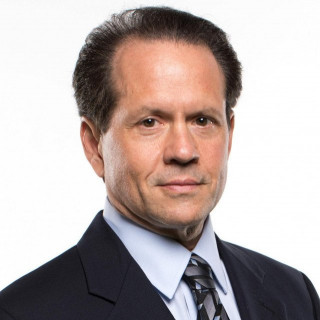
Jack G. Bernstein, Esq. has been protecting the rights of injured victims and their families for over 40 Years.
What Our Clients Say
Jack and our case manager Traci always answered any questions we had about our case promptly and with great concern of our well being . Jack’s team starting with Dan, we felt like we had chosen the best attorney to settle our case and in the end we did.
We look forward to and confident of Jack’s representation of our next case.
Thank you so much
Sincerely Mark and Cecilia
Why a Rideshare Crash Is Not Just a Car Accident With Extra Steps
In an ordinary Nevada car crash, the analysis is comparatively simple: the at-fault driver’s personal auto policy responds, and the fight is usually about fault and damages, not about whether any policy is triggered at all.
A Las Vegas Uber or Lyft crash works differently. Several policies sit on top of one another (the driver’s personal auto policy, the rideshare company’s commercial policy, sometimes uninsured-motorist coverage), and only one set is “live” at the moment of the crash, decided by what the driver’s app was doing. That is the part competitors leave out when they tell you “Uber carries a $1 million policy.” Sometimes it does. Sometimes the live coverage is a fraction of that. And the carriers know the public does not understand the difference, which is exactly why the app-status question becomes the battleground.
What this means for you: before anyone talks about how much your case is worth, the threshold question is which policy is even on the hook, and answering it correctly is where a rideshare claim is won or lost.
The Coverage Periods: The Decision Tool the App Status Controls
Nevada’s rideshare insurance rules live in NRS 690B.470. The statute itself does not use the words “Period 0, 1, 2, 3” (that is industry shorthand), but it does draw the exact lines the shorthand describes, based on whether the driver is “providing transportation services” or merely “logged into the digital network … and available to receive requests … but is not otherwise providing transportation services.”
Here is the grid, read as a timeline of who pays.
| Period | Driver’s app status | Coverage that applies (Nevada) | The catch |
|---|---|---|---|
| Period 0 | App off (driver is a private motorist) | The driver’s personal auto policy only; no rideshare coverage | The rideshare company will disclaim entirely. This is an ordinary car-accident claim. |
| Period 1 | App on, no ride accepted (“available”) | Contingent rideshare coverage: $50,000 per person / $100,000 per accident / $25,000 property (NRS 690B.470(1)(b)–(d)) | The gap. Personal carrier may deny for commercial use; rideshare carrier calls its coverage contingent. This is where both sides point at each other. |
| Period 2 | Ride accepted, en route to pick up | $1,000,000 active-period policy (NRS 690B.470(1)(a)) | The high-limit policy is live, but the company will dispute exactly when “en route” began. |
| Period 3 | Passenger in the car | $1,000,000 active-period policy (NRS 690B.470(1)(a)) | The strongest coverage position. Passengers are almost always here. |
Bottom line: Find the period and you have found the coverage. The single most consequential fact in a Las Vegas rideshare claim is not how badly you were hurt. It is what the driver’s app was doing when the cars met.
A note on the dollar figures, because they recently changed. Until October 1, 2025, the active-period floor (Periods 2 and 3) was $1.5 million. Nevada’s Assembly Bill 523, signed May 19, 2025 and effective October 1, 2025, lowered that floor to $1 million. The enrolled bill text makes the change explicit, amending NRS 690B.470(1)(a) to read “not less than [$1,500,000] $1,000,000.” So the correct floor depends on the date of your crash: $1.5 million before October 1, 2025; $1 million on or after. Any source quoting a flat $1.5 million today is citing a number that no longer governs new crashes.
What this means for you: if your crash predates October 1, 2025, the higher floor still applies to it; the change is not retroactive to incidents that already happened. If it is more recent, plan around the $1 million figure and, for a serious injury, look hard for the additional layers below, because $1 million can be exhausted fast in a catastrophic or multi-victim crash.
The Period 1 Gap: Where Both Insurers Deny
The “app on, no ride accepted” window is the single most contested situation in Nevada rideshare claims, and it is worth understanding before it happens to you.
Here is the mechanism. The driver is logged in and waiting. A crash occurs. The driver’s personal auto insurer learns the car was being used for Uber or Lyft and denies the claim, invoking a commercial-use or “livery” exclusion. The rideshare company’s insurer responds that its Period-1 coverage is only contingent: it applies, the carrier argues, only after the personal policy pays, or only if the driver was properly logged in within the coverage window. The result is two denial letters that each point at the other carrier.
That outcome is in tension with what NRS 690B.470 can be argued to require. The statute says the rideshare company’s policy must step in as primary when the driver’s coverage “lapses” or “fails to meet the requirements” (NRS 690B.470(4)). Two open questions sit inside that leverage, and both are arguments a plaintiff has to press, sometimes in litigation: first, subsection (4) is written to apply “during any period in which the driver … is providing transportation services,” so a Period-1 claimant must argue the primary-coverage mandate reaches the “logged in but waiting” window at all; and second, that a personal-policy denial for commercial use is the kind of “failure to meet the requirements” the statute means. Neither is settled law, but together they are the statutory hook for forcing the contingent coverage to respond.
Experienced rideshare attorneys treat the Period-1 denial not as the end of a claim but as a predictable opening move: the carriers are leveraging public confusion about app status and coverage triggers, and the response is to nail down the digital app log, then invoke the statute’s primary-coverage mandate directly. What this means for you: a denial letter in this window is not a verdict on your claim. It is the start of a coverage fight, and the contingent limits ($50,000 / $100,000 / $25,000) are low enough that finding every other available layer matters even more than usual. The deeper mechanics of the dual-denial (the exact exclusion language, the timing disputes, the denial-letter patterns) are covered in detail in Uber’s Period 1 gap and why coverage gets denied when the app is on.
The Independent-Contractor Shield, and the Hole AB 523 Left in It
Uber and Lyft have long maintained that their drivers are independent contractors, not employees. That position matters because it is the foundation of a liability shield: if the driver is not an employee, the companies argue, they are not responsible for the driver’s negligence under ordinary respondeat superior (an employer’s liability for an employee’s on-the-job conduct).
AB 523 went further and wrote a shield into statute. It added a new provision (in NRS Chapter 706A) stating that a transportation network company “is not vicariously liable for any act or omission of a driver or passenger … under any theory of liability or duty of care,” so long as the company maintains the $1 million policy. In plain terms: you generally cannot hold Uber or Lyft responsible merely because their driver caused the crash.
But the same section of AB 523 contains the hole. It expressly provides that the shield “does not alter or preclude any other theory of liability against a transportation network company … to the extent available and proven under law.” That is the carve-out for direct negligence: the company’s own conduct, as opposed to the driver’s. Direct-negligence theories a rideshare company cannot wall off with the vicarious-liability shield can include negligent hiring or retention of a driver the company should not have kept on the platform, or negligence in the design or operation of the app itself.
Bottom line: AB 523 closed the front door (you can’t sue Uber just because its driver was at fault) but left the side door open (you can still sue Uber for what Uber itself did wrong). The whole post-AB 523 strategy is finding and proving that direct conduct.
The doctrinal playbook for piercing a contractor shield (the right-to-control analysis, the negligent-hiring and ostensible-agency theories) is laid out for a parallel context in piercing the independent-contractor shield in delivery-van cases. The structure of the argument transfers; the rideshare-specific wrinkle is that AB 523 now conditions the vicarious shield on the insurance, while leaving direct theories untouched.
UM/UIM: The Recovery Layer Most People Never Check
There is a coverage layer that frequently goes unexamined in rideshare claims: uninsured and underinsured motorist coverage (UM/UIM). It pays your damages when the at-fault driver has no insurance or not enough, which matters because Nevada has a large uninsured-driver population, and a $1 million active-period policy can be exhausted by a single catastrophic injury.
NRS 690B.470(6) expressly allows a rideshare insurance policy to include UM/UIM coverage, but it does not require it, and whether a given rideshare company’s policy carries UM/UIM in Nevada has become a moving target. So this is a layer to investigate, not assume. There are usually two places to look: whether the rideshare company’s policy in force at the time included UM/UIM, and whether your own personal auto policy’s UM/UIM applies to you as a passenger or pedestrian. Under NRS 687B.145(2), Nevada UM/UIM coverage is “excess” coverage and Nevada permits stacking (combining limits across multiple eligible policies) unless an insurer has strictly met the statutory requirements for a valid anti-stacking clause.
What this means for you: if the at-fault driver was uninsured or underinsured, do not assume the rideshare company’s liability policy is the only money on the table. Your own UM/UIM coverage may apply even though you were a passenger in someone else’s car, and in Nevada it may stack, a recovery path competitors routinely skip and adjusters have no incentive to mention.
If You Were a Passenger in the Uber or Lyft
As a passenger, you are in the strongest coverage position, because you were almost certainly in Period 3: passenger in the car, with the $1 million active-period policy live (for crashes on or after October 1, 2025). You also did nothing to cause the crash, which removes the comparative-fault fight that complicates other claims.
Two complications are common. First, the rideshare driver may not be the one at fault (another vehicle may have caused the crash). When that happens your recovery may run against the other driver’s insurance first, with the rideshare policy and any UM/UIM behind it, so all the layers above are in play. Second, you may be a tourist. If you were visiting Las Vegas, you can pursue the claim under Nevada law even after you fly home, and a Nevada crash is generally governed by Nevada law, because the state where the injury happened ordinarily has the most significant relationship to the case (General Motors Corp. v. Eighth Judicial Dist. Ct., 122 Nev. 466, 134 P.3d 111 (2006)). That is a presumption, not an absolute rule, but for a typical visitor hurt by a Nevada driver or business it points to Nevada law and Nevada’s two-year deadline. The out-of-state-plaintiff issues (coordinating evidence and treatment from another state, which state’s law governs a specific issue) are handled at depth on the Las Vegas tourist injury page.
The catch: your strong coverage position is real, but it does not collect itself. The rideshare company’s claims process is built to settle quickly and for less, and the period and at-fault analysis still have to be proven before anyone discusses value.
If You Were Hit by a Rideshare Driver
If a rideshare driver hit you while you were driving another car, walking, or riding a bike, your entire recovery can turn on a fact you had no way to see: the driver’s app status at the moment of impact. That single fact decides whether you are looking at a $1 million policy (Periods 2–3), a $50,000 contingent policy (Period 1), or only the driver’s personal coverage (Period 0).
This is the situation where the carriers fight hardest over app status, because the dollar difference between periods is enormous. The rideshare company’s insurer has every incentive to place the driver in Period 0 or just outside the Period-1 window; the driver’s personal carrier has every incentive to place the driver inside rideshare activity so it can deny. You are caught in the middle of a fight over a digital record you do not control, which is why preserving and obtaining that record early is decisive.
If you were a pedestrian or cyclist struck by a rideshare driver, the Las Vegas pedestrian accident page covers the right-of-way and crosswalk rules that bear on fault. The coverage analysis, though, is the rideshare framework on this page.
The practical takeaway: do not accept any carrier’s characterization of “what period the driver was in” at face value. That characterization is the whole ballgame, the carriers have opposed incentives to shade it, and it is provable only from app and trip data.
If You Are the Rideshare Driver
If you drive for Uber or Lyft and were hurt in a crash, your coverage also tracks your app status, but the harder problem is the independent-contractor label being used against you. Because the companies treat drivers as independent contractors, they generally do not provide Nevada workers’ compensation, which is the protection an employee would have. Whether that label holds is a genuine legal question (Nevada applies a multi-factor employment test), but AB 523’s vicarious-liability shield now sits on top of that fight, which is why a driver’s recovery usually runs through insurance layers rather than an employment claim.
Where you look depends on the period and on who was at fault. If another driver caused the crash, that driver’s liability coverage is the first target, with your own UM/UIM behind it if they were uninsured or underinsured. The rideshare company’s active-period coverage and any occupational-accident coverage it offers may also be in the picture during Periods 2 and 3.
For you as the driver: the “you’re an independent contractor” line is a starting position, not the final word on what covers you; the practical recovery for an injured driver almost always comes from identifying every applicable insurance layer, fast, rather than from re-litigating employment status alone.
The First 72 Hours: Preserve the Proof Before It Disappears
The evidence that proves which period applied is almost entirely digital, and the rideshare company controls most of it. App logs, trip timestamps, GPS data, and driver-status records are what establish whether the driver was offline, available, or carrying a passenger, and that data does not sit around indefinitely.
If the crash just happened:
- Screenshot everything in the app now. If you were the passenger, your trip receipt, the driver’s name and vehicle, and the pickup/drop-off times are in your own account; capture them before anything changes.
- Photograph the driver’s screen if it is safe. A visible app status (or a dark, logged-off screen) at the scene is direct evidence of the period.
- Get names and numbers of witnesses, and note any nearby business or traffic cameras on the Strip or the surrounding streets.
- Preserve, don’t volunteer. Decline to give a recorded statement to any insurer until you understand which period and which policy are in play; an adjuster’s early “just checking on you” call is an evidence-gathering event.
The reason speed matters is structural: a formal preservation demand to the rideshare company is what freezes the app and trip data before routine retention cycles put it out of easy reach. What this means for you: the difference between a provable period and an unprovable one is often made in the first days, and Nevada’s two-year deadline to file most injury claims (NRS 11.190(4)(e)) is the outer limit, not a reason to wait.
How Fault Affects What You Recover
Nevada follows modified comparative negligence under NRS 41.141. You can still recover as long as your share of fault is not greater than the combined negligence of everyone you are seeking recovery from; cross that line and recovery is barred. (The statute does not contain a literal “51%”; that figure is the common shorthand for the “not greater than the combined” rule, and Nevada weighs your fault against all defendants combined, not one at a time.) Your recovery is then reduced in proportion to your share of fault.
This matters in rideshare cases because comparative fault is a lever the carriers pull. Inflating a passenger’s or third party’s supposed fault is one way to reduce or defeat a claim. What this means for you: an adjuster’s suggestion that you were partly to blame is not the last word; how fault is actually apportioned among multiple drivers and carriers is a contested question, and on a serious claim it is worth contesting.
Other Las Vegas Vehicle-for-Hire Crashes Are Not Rideshare
A taxi, a limousine, a hotel shuttle, and a charter or tour bus are not transportation network companies, and the coverage framework on this page does not apply to them. The period grid, NRS 690B.470, and AB 523 are specific to app-based rideshare. Those other modes run on different rules. Limousines, shuttles, and buses generally ride on the common-carrier standard (a heightened duty of care), while taxis run on a different primary/secondary insurance structure. If your crash involved one of those, the answer lives on its own page:
- Las Vegas taxi accident attorneys: taxis are not TNCs; different insurance layering.
- Las Vegas limousine accident attorneys: common-carrier duty; also see limo and party-bus accident rights.
- Las Vegas hotel shuttle accident attorneys, plus limo and shuttle-bus passenger rights.
- Las Vegas bus accident lawyers, including tour-bus passenger claims and Grand Canyon tour-bus jurisdiction battles.
One adjacent situation also has its own answer: a crash in a peer-to-peer rental (Turo and similar) is neither rideshare nor a traditional rental, and the “who pays” analysis differs again. See Turo peer-to-peer rentals and who pays for the crash. For the general car-accident process that underlies all of these, the Las Vegas car accident and Las Vegas personal injury pages cover the fundamentals this page builds on. Large-policy, multi-defendant commercial-vehicle crashes share structure with Las Vegas truck accident claims.
Frequently Asked Questions
Does Uber or Lyft Always Have a $1 Million Policy?
No. The $1 million active-period policy applies only when the driver has accepted a ride or has a passenger in the car (Periods 2 and 3). When the driver is logged in but waiting (Period 1), the rideshare coverage is contingent and far lower: $50,000 per person, $100,000 per accident, $25,000 property. When the app is off (Period 0), there is no rideshare coverage at all. And for crashes before October 1, 2025, the active-period floor was $1.5 million, not $1 million.
What Is the Period 1 Gap?
Period 1 is the window when the driver’s app is on but no ride has been accepted. In a crash during this window, the driver’s personal insurer often denies the claim for commercial use, while the rideshare company calls its coverage contingent, so an injured person can receive denials from both carriers. Nevada law (NRS 690B.470) requires the rideshare company’s policy to step in as primary when the driver’s coverage fails, but enforcing that often takes a coverage fight.
Can I Still Sue Uber or Lyft After AB 523?
Not for the driver’s negligence alone. AB 523 shields the company from vicarious liability for a driver’s acts as long as it keeps the $1 million policy. But the same law preserves claims for the company’s own direct negligence (such as negligent hiring or app-design negligence). Those direct theories are the path that remains.
I Was Visiting Las Vegas. Can I Still File After I Go Home?
Yes. A crash that happened in Nevada is generally governed by Nevada law and can be pursued here even after you return home. Nevada’s deadline to file most injury claims is two years from the injury (NRS 11.190(4)(e)), so it is worth preserving evidence and getting advice before you leave the state.
How Do I Prove Which Period the Driver Was In?
Through the digital record: app logs, trip timestamps, GPS data, and driver-status records, plus your own trip receipt if you were the passenger and a photo of the driver’s screen if you could safely take one. Because the rideshare company controls most of that data and it is subject to routine retention cycles, a prompt preservation demand is what keeps it available.
If You Were Injured in Las Vegas
With over 40 years as a personal injury attorney and more than $500 million recovered in verdicts and settlements, Jack Bernstein understands how a Las Vegas rideshare claim turns on facts most people never see at the scene: the driver’s app status, which insurance period was live, and which carrier is quietly trying to push the loss onto another. If you were injured as a passenger, as someone hit by an Uber or Lyft driver, or as a rideshare driver, Jack Bernstein Injury Lawyers offers a free consultation to identify which policies apply, preserve the digital proof before it is gone, and protect your claim before Nevada’s two-year deadline runs. Call (702) 633-3333.