If you’ve been cut by broken glass at a nightclub, bar, or lounge in Las Vegas (or a similar venue anywhere in Nevada), the question you’re trying to answer probably isn’t “can I sue?” It’s more like: “Was this just bad luck, or is the nightclub actually responsible?”
That question has a specific legal answer, and it comes down to something most people have never heard of: constructive notice. In simple terms, the nightclub doesn’t have to know about the exact piece of glass that cut you. They just have to have had enough time or enough reason to discover it through reasonable inspection. How courts evaluate that in the context of a dark, crowded, high-volume nightclub is where these cases get genuinely interesting, and where knowing the details can help you determine whether your situation is worth pursuing.
Whether your injury happened at a casino nightclub, a standalone bar, a hotel lounge, a pool party, or a similar venue, the same analysis applies. If you’re researching for a friend or family member, or if your situation involved a different type of nightclub or dayclub injury, the notice principles discussed here still form the foundation of most premises liability claims.
The Real Question in Every Nightclub Glass Case: Did the Venue Have Notice?
Most elements of a nightclub glass injury claim are straightforward. You were a paying customer (invitee, owed the highest duty of care). You got cut by glass (causation). You have medical bills, scarring, missed work (damages). The element that actually makes or breaks these cases is whether the nightclub breached its duty of care, and that usually comes down to one word: notice.
Nevada premises liability law requires you to prove negligence by showing the venue knew or should have known about the hazard. There are two types of notice that satisfy this requirement, and understanding the difference is critical.
Actual notice means someone at the venue knew about the broken glass. A bartender dropped a glass and didn’t clean it up. A patron told a bouncer there was glass on the dance floor and nothing happened. A server saw the broken glass and kept walking. If any employee was aware of the hazard, that’s actual notice, and the case is strong.
Constructive notice is where most nightclub glass cases are decided. Constructive notice means the broken glass existed for long enough that a reasonably diligent inspection would have discovered it. The venue didn’t know about it, but they should have known. Under Nevada law, property owners have an obligation not just to fix hazards they know about, but to actively inspect for hazards they don’t (NRS 41.130). The Nevada Supreme Court has taken a broad view of this duty. In Foster v. Costco Wholesale Corp., 291 P.3d 150 (Nev. 2012), the court held that a hazard being “open and obvious” does not automatically relieve the property owner of liability, adopting the Restatement (Third) of Torts standard that landowners bear a general duty of reasonable care to all invitees. The practical implication: a nightclub cannot argue that broken glass was visible and therefore not its problem. The duty to exercise reasonable care, including reasonable inspection, applies regardless.
The practical question becomes: how long does broken glass have to sit on a nightclub floor before the venue “should have known”?
How Long Is Too Long? What “Reasonable Inspection” Means in a Nightclub
There is no bright-line rule in Nevada that says “15 minutes” or “30 minutes” creates constructive notice. Courts evaluate reasonableness based on the specific environment, and this is where nightclub cases differ significantly from a grocery store slip-and-fall.
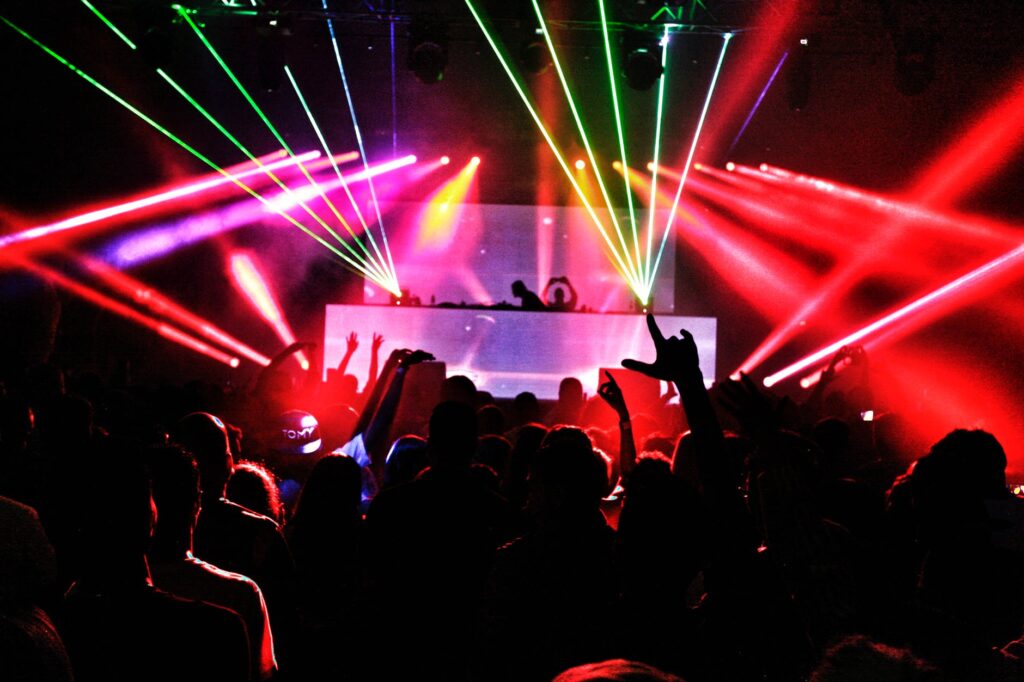
A grocery store with bright fluorescent lighting, wide aisles, and employees walking past every few minutes has different inspection expectations than a nightclub operating at 2 AM with strobe lights, a packed dance floor, and ear-splitting music. But here is the key insight: the venue chose to create that environment. Dim lighting, crowded conditions, and glass drinkware served at high volume are all business decisions. A strong plaintiff’s argument, and one that Nevada’s broad duty-of-care framework supports, is that a venue which makes hazard detection more difficult cannot then use that same difficulty as a defense. The reasonable inspection standard accounts for the environment the business creates. A venue that operates in conditions where hazards are harder to see should have systems in place that compensate for those conditions, such as more frequent floor sweeps, dedicated safety staff, or flashlight-equipped floor monitors.
This means courts look at factors like:
How predictable was glass breakage? A venue serving hundreds of glass drinks per night, in a packed environment where people are dancing, bumping into each other, and consuming alcohol, can reasonably expect glass breakage multiple times every evening. OSHA guidelines for restaurant and bar environments specify that broken glass must be cleaned with a broom and dustpan or mechanical means (OSHA Restaurant Safety Guidelines). When breakage is this predictable, the inspection frequency should match the risk.
Did the venue have an inspection routine? A nightclub that assigns floor staff to sweep high-traffic areas every 15 to 20 minutes is in a much stronger defensive position than one with no documented inspection protocol. The absence of any written cleanup procedure or floor-check schedule can itself be evidence of negligence. If the venue cannot produce cleaning logs, employee rotation records, or any documentation showing systematic floor monitoring, that gap works in the injured patron’s favor.
What were the lighting and visibility conditions? If the venue’s own lighting made broken glass nearly invisible to both patrons and staff, that raises the question of what compensating measures were in place. Were staff equipped with flashlights? Were bar-adjacent floor areas better lit? Was there a policy restricting glass to certain areas? If the answer to all of these is no, the venue created a see-nothing environment and then failed to inspect it.
Was the broken glass near a high-risk area? Glass on a dance floor (where people are moving, often in open-toed shoes or thin-soled footwear) is a more foreseeable danger than glass in an empty hallway. Glass near bar rails, bottle service areas, or staircases where spills routinely happen should trigger more frequent inspection.
The “Mode of Operation” Argument: When the Business Model Itself Creates the Hazard
Some courts apply a concept called the “mode of operation” doctrine, which shifts the analysis from “how long was this specific piece of glass on the floor?” to “is the way this business operates so inherently likely to create hazards that constructive notice should be presumed?”
The classic example is a self-service salad bar: customers serve themselves, spills are inevitable, and the business knows this. Courts in those settings have held that the business cannot wait for actual notice of each individual spill. The operation itself puts the business on notice that hazards will continuously arise.
A nightclub serving glass drinkware to intoxicated patrons in a dark, crowded room has a strong parallel. Glass breakage is not an aberration; it is a nightly certainty. The argument is that a venue operating under these conditions is on constructive notice of glass hazards at all times during operation, and the question shifts to whether their inspection and cleanup systems were adequate, not whether they knew about the specific piece of glass that caused the injury.
This is a more aggressive legal theory, and its success depends on how courts apply it to the specific venue’s operations. Nevada courts have recognized the mode of operation doctrine. In FGA, Inc. v. Giglio, 289 P.3d 1223 (Nev. 2012), the Nevada Supreme Court acknowledged the doctrine’s validity but limited it to self-service contexts, holding it did not extend to sit-down restaurants. More recently, the Nevada Court of Appeals in Moore v. Primadonna (January 2026) reversed summary judgment for a truck stop where the plaintiff was injured by a hazard inherent to the venue’s self-service fueling operation, reinforcing that the doctrine applies when the business model itself creates recurring, foreseeable hazards. A nightclub serving glass drinkware in dark, crowded conditions presents a comparable argument: the business model makes glass breakage a nightly certainty, and the question shifts from “did they know about this specific glass?” to “were their systems adequate for the hazard their operation predictably creates?” Whether a nightclub’s glass service qualifies as a “self-service” operation under Nevada’s mode of operation framework has not been directly decided, but the argument has force where patrons are handling, carrying, and setting down glass drinkware throughout the venue without staff intermediation.
Why Surveillance Footage Is the Case, and Why It Disappears
In most nightclub glass cases, the single most important piece of evidence is the venue’s own surveillance footage. Footage can show when the glass broke, how long it remained on the floor, whether staff walked past it, whether inspections were happening, and what the injured patron was doing at the time. It can establish constructive notice in minutes or destroy a case just as quickly.
The problem: most nightclub surveillance systems overwrite footage within 30 to 90 days. Some smaller bars cycle through storage in as little as 7 to 14 days. Unlike casinos, which may be subject to Nevada Gaming Commission retention requirements, standalone nightclubs and bars typically have no state-mandated minimum. The system records until storage fills, then the oldest footage is automatically deleted.
This creates a narrow window. If you were injured on a Saturday night and you contact an attorney three months later, the footage is almost certainly gone. If you contact an attorney within the first two weeks, there is a strong chance the footage still exists and can be preserved.
An attorney can send a preservation letter (sometimes called a spoliation letter or litigation hold) to the venue, legally demanding that they retain all surveillance footage, incident reports, cleaning logs, employee schedules, and glass-breakage records from the date of your injury. Once the venue receives this letter, they have a legal obligation to preserve that evidence. Nevada law treats evidence destruction seriously, with consequences that depend on whether the destruction was negligent or intentional. Under Bass-Davis v. Davis, 134 P.3d 103 (Nev. 2006), negligent loss of evidence allows a permissive adverse inference: the jury may (but is not required to) infer that the missing evidence would have been unfavorable to the venue. Willful destruction with intent to harm triggers a stronger remedy under NRS 47.250(3): a rebuttable presumption that the destroyed evidence was adverse. Destroying footage after receiving a preservation demand is difficult to characterize as merely negligent, which is why sending that letter early is so valuable.
This is the single most time-sensitive action in a nightclub glass injury case. Everything else (medical treatment, claim filing, negotiations) operates on a timeline of months or years. Footage preservation operates on a timeline of days to weeks.
Scarring From Glass Lacerations: The Damage Category That Changes Case Value
Beyond the immediate medical costs (ER visits, stitches, antibiotics for infection), the damage that often has the most impact on the value of a nightclub glass injury claim is permanent scarring and disfigurement.
Many people do not realize that scarring is a separately compensable category of non-economic damages in Nevada. There is no cap on non-economic damages in standard personal injury cases (the only cap applies to medical malpractice, currently $590,000 for 2026 under NRS 41A.035). This means a facial scar from a glass laceration can carry significant independent value beyond your medical bills and lost wages.
How courts and insurers evaluate scarring:
Visibility matters most. A scar on the face, forearm, or hand (visible in everyday life) is valued higher than a scar on the torso or upper leg. A facial scar that changes how a person is perceived in professional or social settings can be the single largest component of a claim.
Documentation creates value. If your treating physician notes the wound dimensions (length, depth), whether glass fragments were removed, and whether the laceration is likely to produce a permanent scar, that medical documentation becomes the foundation of the scarring claim. Photographs taken at injury, 30 days, 90 days, and 6 months create a visual timeline that makes the scar’s permanence concrete for an adjuster or jury.
Complications amplify value. Some individuals develop keloid or hypertrophic scars (raised, discolored tissue). Glass lacerations treated in a nightclub environment (where the wound may have been exposed to alcohol, floor debris, or unsanitary conditions before medical treatment) carry elevated infection risk. If the wound became infected and the infection worsened the eventual scar, those complications are part of the damage picture.
The Intoxication Defense and Comparative Negligence: What Actually Happens
The venue’s first defense in any nightclub glass injury case will be some version of: “the patron was drunk.” Nevada law does give alcohol-serving venues a defense when a patron’s intoxication caused their injury. But this defense is narrower than most venues want you to believe.
Under Nevada’s modified comparative negligence rule (NRS 41.141), you can still recover damages if your negligence was not greater than the venue’s. Even if a jury assigns you 40% fault (because you were barefoot on a dance floor, or you knocked the glass over yourself), you would still recover 60% of your damages.
The real-world question is whether your intoxication was a cause of the injury or merely a circumstance. If you stepped on glass that had been on the floor for 30 minutes in an area the venue should have been inspecting, your blood alcohol level didn’t put the glass there. The venue’s failure to find and remove it did. Surveillance footage showing the timeline of the hazard (glass breaks at 12:15 AM, patron steps on it at 12:45 AM, no staff sweep occurs in between) shifts the analysis decisively toward the venue’s negligence regardless of the patron’s condition.
When a Nightclub Glass Injury Claim Is Worth Pursuing (and When It Isn’t)
Not every glass cut at a bar is a viable legal claim. Here is an honest assessment framework:
Your case is likely strong if:
- Surveillance footage shows the glass was on the floor for more than a few minutes before your injury (constructive notice)
- An employee saw the glass and did not clean it up, or you reported it and nothing happened (actual notice)
- Your laceration required stitches, staples, or surgical closure
- You have visible scarring, especially on the face, hands, or forearms
- Glass fragments were embedded in the wound and required medical removal or imaging
- The wound became infected, requiring antibiotics or additional treatment
- The venue has no documented inspection or glass-cleanup protocol
Your case is likely weak if:
- The glass broke seconds before you stepped on it and no one had any opportunity to discover it
- Your injury is superficial (a minor scrape with no medical treatment)
- You were the person who broke the glass and immediately stepped on the shards
- No evidence exists (no footage, no witnesses, no incident report, no medical records)
If your situation falls in between, that’s where professional evaluation matters. The facts of the notice question, specifically whether the venue had enough time to discover the hazard, usually determine which side of the line a case falls on.
Watch the clock: Nevada generally requires personal injury claims be filed within two years of the date of injury (NRS 11.190). But the real urgency is evidence preservation. Surveillance footage can be gone in weeks.
How Jack Bernstein Evaluates Nightclub Glass Laceration Claims
The viability of a nightclub broken glass injury claim turns on specific facts: how long the glass was on the floor, whether the venue’s inspection systems were adequate for its operating conditions, whether footage still exists, and what the medical documentation shows about your injury and scarring. With 40+ years as a personal injury attorney, Jack Bernstein understands how to assess constructive notice, preserve time-sensitive evidence, and evaluate whether a nightclub glass laceration has the elements of a viable claim.
If you or someone you know was seriously cut by broken glass at a Las Vegas nightclub, bar, or similar venue, contact Jack Bernstein Injury Lawyers for a free consultation: (702) 633-3333.