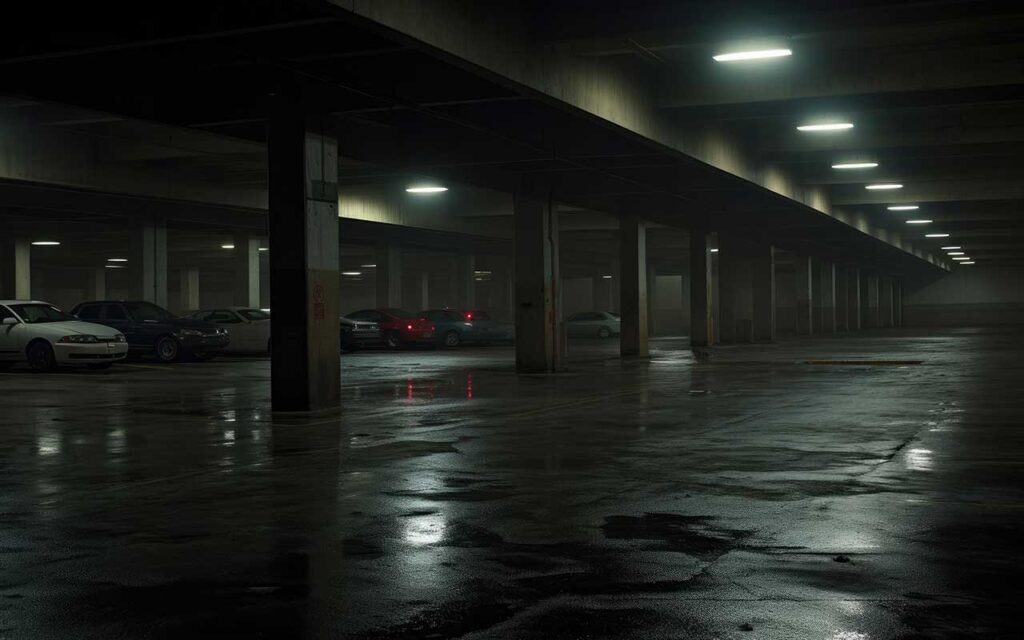
When you park at a Las Vegas hotel or casino, you expect a basic level of safety. You assume the cameras are recording, the lights are on, and security is patrolling. But when a guest is mugged, assaulted, or carjacked in a parking garage, that illusion of safety shatters.
The question immediately follows: Is the hotel responsible for the criminal’s actions?
In Nevada, the answer is complex but clear: Yes, if the crime was “foreseeable” and the hotel failed to prevent it. While hotels aren’t responsible for every random act, they are responsible when they ignore known dangers.
As a Las Vegas negligent security attorney with over 40 years of experience, Jack Bernstein sees this too often: hotels cutting costs on security guards or lighting, leaving guests vulnerable in the shadows. This guide explains how we hold them accountable under Nevada law.
The Legal Standard: “Foreseeability” (NRS 651.015)
Liability for hotel assaults is governed by NRS 651.015. This statute sets the ground rules: a hotel is liable for a third party’s crime if:
- The wrongful act was foreseeable; AND
- The owner failed to take reasonable precautions against it.
This creates a two-step battle. We don’t just prove you were hurt; we prove the hotel knew or should have known the danger existed and chose to do nothing.
How We Prove They “Should Have Known”
Nevada courts use a “totality of the circumstances” test (established in Doud v. Las Vegas Hilton Corp.). We look at the full picture:
- Prior Similar Crimes: If the garage had a history of muggings or break-ins, the hotel was “on notice” (Humphries v. New York-New York Hotel & Casino confirmed these crimes don’t need to be identical to yours to count).
- High-Crime Area: We use CAP Index reports (standardized crime risk assessments used by insurance companies and security professionals) to show if the hotel sits in a “red zone” for violent crime, which requires higher security standards.
- Internal Failures: If the hotel’s own logs show guards were skipping patrols, they failed their duty of care.
Red Flags of Negligent Security (Checklist)
You don’t need to be a lawyer to spot negligence. If you were assaulted in a parking garage, look for these physical “red flags” that often signal a failure of due care.
1. Inadequate Lighting (The “Dark Corner” Trap)
Criminals hide in the dark. Municipal codes and industry standards dictate minimum light levels for parking structures.
- The Negligence: Burnt-out bulbs, dark stairwells, or shadows caused by poor design create “ambush zones.” If a hotel fails to replace lights they knew were broken, they are liable for the resulting danger.
2. “Ghost” Security
- The Reality: Many hotels hire the cheapest security vendors available.
- The Negligence: Guards who are “ghosts”—meaning they are logged as being on duty but are actually texting in the breakroom, sleeping, or absent from their post.
- The Evidence: We compare GPS tracking on guard radios against their handwritten logs. Discrepancies prove negligence.
3. Broken Access Controls
- The Reality: Parking gates are often left broken in the “up” position because it’s cheaper than fixing them or staffing a booth.
- The Negligence: A broken gate invites non-guests and criminals into a private, secure area. If the gate was broken for weeks, the hotel invited the risk.
4. The “Dummy Camera” Problem
- The Reality: Many black domes on ceilings are empty shells or contain broken cameras.
- The Negligence: While Nevada law doesn’t strictly mandate cameras in all areas, creating a false sense of security with dummy cameras can be argued as negligence if it led you to park there believing you were watched.
Evidence We Must Secure Immediately
In negligent security cases, the evidence disappears fast. The hotel controls the video, the logs, and the lighting records.
- Surveillance Footage: We send a preservation letter immediately. We need not just the attack, but the hours before it—to show the attacker loitering (which security should have spotted).
- Shift Activity Reports (SARS): These logs reveal where guards actually were versus where they were supposed to be.
- Maintenance Records: Did the hotel know the lights were out? Maintenance tickets will show if they ordered bulbs but waited weeks to install them.
- 911 Call Logs: These reveal how many times police were called to the property in the last 2 years, establishing “foreseeability.”
Action Plan: What to Do If You Are Assaulted
- Get to Safety & Call 911: A police report is the foundation of your case.
- Report to Hotel Security (But Be Careful): Report the incident to establish it happened on their property. Do not admit fault (e.g., avoid saying “I shouldn’t have walked there alone”). Just state the facts of the attack.
- Photograph the Scene: If the lights were out, take a picture of the darkness. If the gate was broken, take a picture of it. Conditions change by the next morning.
- Preserve Physical Evidence: Do not wash clothes with blood or DNA evidence.
- Watch the Clock: You have two years from the date of the assault to file a lawsuit in Nevada (NRS 11.190).
Why You Need an Experienced Attorney
Hotels and casinos have powerful legal teams dedicated to proving they did “enough.” They will argue the crime was random and unpreventable.
We know how to prove otherwise. With 40+ years of experience, Jack Bernstein knows how to obtain the internal security logs, maintenance records, and crime grid data that hotels try to hide. We don’t just look at the attack; we look at the months of negligence that allowed it to happen.
Contact Jack Bernstein Injury Lawyers for a free consultation to evaluate your negligent security claim: (702) 633-3333.