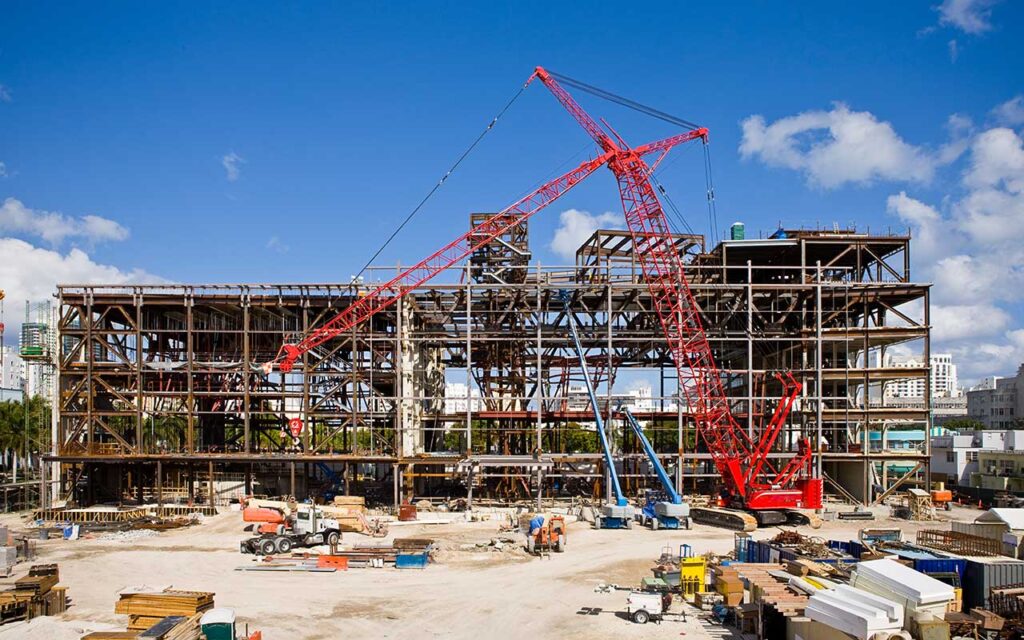
Construction sites across Las Vegas and Nevada are dangerous environments, not just for the crews working there, but for the many professionals who visit daily. Architects, inspectors, delivery drivers, vendors, and real estate agents all navigate these hazards as part of their jobs.
If you or a family member has been injured on a construction site as a visitor—or even near a site due to debris, equipment, or truck traffic—your legal situation is fundamentally different from that of a construction worker. You are not restricted to the workers’ compensation system. You have the right to pursue a full personal injury lawsuit for damages that workers’ comp never covers, including pain and suffering. Understanding your status as a “third party” is the key to recovering fair compensation.
Below, we explain who can be held liable, what evidence proves negligence (including site logs and footage most people don’t know to request), and the critical deadlines you must meet.
Why Visitors Can Sue When Workers Can’t
For direct employees of a construction company, Nevada law generally makes workers’ compensation the “exclusive remedy” for injuries (NRS 616A.020). This means employees typically cannot sue their bosses for negligence, even if the safety conditions were terrible. In exchange, they get automatic medical coverage without proving fault.
Visitors are not bound by this restriction.
As a non-employee, you retain your full civil rights. If a General Contractor (GC), subcontractor, or property owner acts negligently and causes your injury, you can file a personal injury lawsuit against them. This allows you to seek:
- Full lost wages (not just the percentage workers’ comp pays).
- Pain and suffering (never covered by workers’ comp).
- Loss of future earning capacity.
- Full medical costs.
The value of any claim depends on specific factors: the severity of your injuries, length of recovery, any permanent impairment, documented lost income, and the strength of evidence showing negligence. Cases involving serious injuries with clear liability documentation typically result in higher compensation than soft-tissue injuries with disputed fault. An attorney can evaluate your specific situation during a free consultation.
Who Is Liable for Construction Site Visitor Injuries?
To win a premises liability claim, you must prove that the entity controlling the site had a duty to keep you safe and failed. Premises liability is the legal principle that property owners and those who control property are responsible for injuries caused by unsafe conditions. On a construction site, the General Contractor usually assumes the role of “controlling employer,” meaning they are responsible for overall site safety, including for visitors.
Common Liability Scenarios
- Falling Objects: If a subcontractor on the third floor drops a tool that hits a delivery driver, that subcontractor (and potentially the GC) is liable for negligence.
- Unmarked Hazards: OSHA regulations require floor holes to be covered or guarded (29 CFR 1926.501(b)(4)). If an inspector falls through an unmarked opening, this violation is strong evidence of negligence.
- Traffic Management: Sites must manage the flow of heavy equipment. If a dump truck backs into a visiting architect’s vehicle because there was no spotter, the site operator may be liable.
These scenarios are hypothetical examples for illustrative purposes. Actual liability depends on the specific facts of each case.
What if You Were Partially at Fault?
Nevada follows a “modified comparative negligence” rule (NRS 41.141). You can still recover damages if you were less than 50% responsible for your injury. Your compensation is reduced by your percentage of fault.
For example, if you ignored a clearly marked barrier and were found 20% at fault for your injury, you could still recover 80% of your damages from the negligent party.
What About Liability Waivers?
Some construction sites require visitors to sign liability releases before entering. However, these waivers typically cannot protect against injuries caused by gross negligence or willful misconduct. If you signed a waiver, an attorney can evaluate whether it actually bars your claim.
If the Insurance Company Contacts You
After a construction site injury, you may hear from the General Contractor’s insurance company or a subcontractor’s insurer within days. They may seem helpful, but their goal is to minimize what they pay.
Protect yourself:
- Do not provide a recorded statement without consulting an attorney first. Adjusters are trained to ask questions that can be used against you later.
- Do not accept an early settlement offer. Initial offers rarely reflect the full value of your claim, especially before you know the extent of your injuries.
- Do not sign medical release authorizations that give the insurer access to your entire medical history. They may look for pre-existing conditions to reduce your compensation.
You are not required to speak with the other party’s insurance company. You can direct all communication to your attorney.
Do You Have a Case? Key Factors
Not every construction site injury leads to a successful claim. Here are factors that strengthen or complicate your case:
Signs you may have a strong claim:
- The hazard was unmarked, unguarded, or not mentioned in any safety briefing
- You received no safety orientation before entering the site
- You have documentation: photos, witnesses, or an incident report
- Your injuries required medical treatment
- OSHA regulations were clearly violated
Factors that may complicate your claim:
- You entered a clearly restricted or marked-off area
- You ignored posted warnings or barriers
- No documentation of the incident exists
- You waited months before seeking medical attention
Having one complicating factor does not necessarily bar recovery—Nevada’s comparative negligence rule allows claims even when you were partially at fault. But the more documentation and evidence you have, the stronger your position.
Evidence That Proves Construction Site Negligence
Proving negligence requires more than just saying the site was messy. We look for specific forensic evidence that establishes a breach of duty.
- The “Indoctrination” Log
Competent General Contractors require visitors to sign in and often receive a brief safety orientation (sometimes called “site indoctrination”).
- The Evidence: We request the sign-in logs and orientation checklists.
- The Argument: If you were allowed on site without this orientation, the GC failed to warn you of known hazards. If you did sign it, we check if the hazard that hurt you was covered in the briefing.
- The Daily Report (The “Super’s Log”)
The Site Superintendent keeps a daily log of activities, weather, and incidents.
- The Evidence: We cross-reference the Daily Report with your injury timeline.
- The Argument: Did the log note “overhead crane work” in the area where you were walking? If they knew overhead work was happening but didn’t tape off the walkway for visitors, that is negligence.
- Video Surveillance and Drones
Modern sites often use time-lapse cameras or security drones to monitor progress.
- The Evidence: We move to secure this footage immediately before it is overwritten.
- The Argument: This footage can definitively prove whether safety barriers were in place at the exact moment of your accident, preventing the defense from claiming they were removed “just after” you fell.
Nevada’s Two-Year Deadline for Construction Injury Claims
You do not have unlimited time to investigate. Nevada generally requires personal injury claims to be filed within two years of the accident date (NRS 11.190).
Construction sites change rapidly. The hole you fell through might be filled with concrete tomorrow. The crew that dropped the debris might be off the job site next week. Waiting to file puts your evidence at risk of disappearing entirely.
What to Do After a Construction Site Injury
- Report the Injury Immediately: Ensure the Site Superintendent creates an incident report. Do not leave the site without documenting that the event occurred.
- Identify the Crews: Construction sites have many companies working at once. Try to identify who created the hazard. Was it the framer? The plumber? Take photos of logos on trucks or vests.
- Seek Medical Attention: Go to a doctor immediately to document your injuries.
- Preserve Your Gear: If you were wearing a hard hat or boots that were damaged during the incident, do not throw them away. They are physical evidence.
Get a Free Case Evaluation
Construction site injury cases involve multiple contractors, shifting blame, and disappearing evidence. Determining who is liable requires understanding contracts, OSHA regulations, and Nevada negligence law—and moving quickly before site conditions change.
With 40+ years of experience handling personal injury claims, Jack Bernstein understands how to identify responsible parties on multi-employer worksites, secure critical evidence like superintendent logs and surveillance footage, and build cases that account for Nevada’s comparative negligence rules.
If you or a family member was injured on a Nevada construction site, contact Jack Bernstein Injury Lawyers for a free consultation: (702) 633-3333.