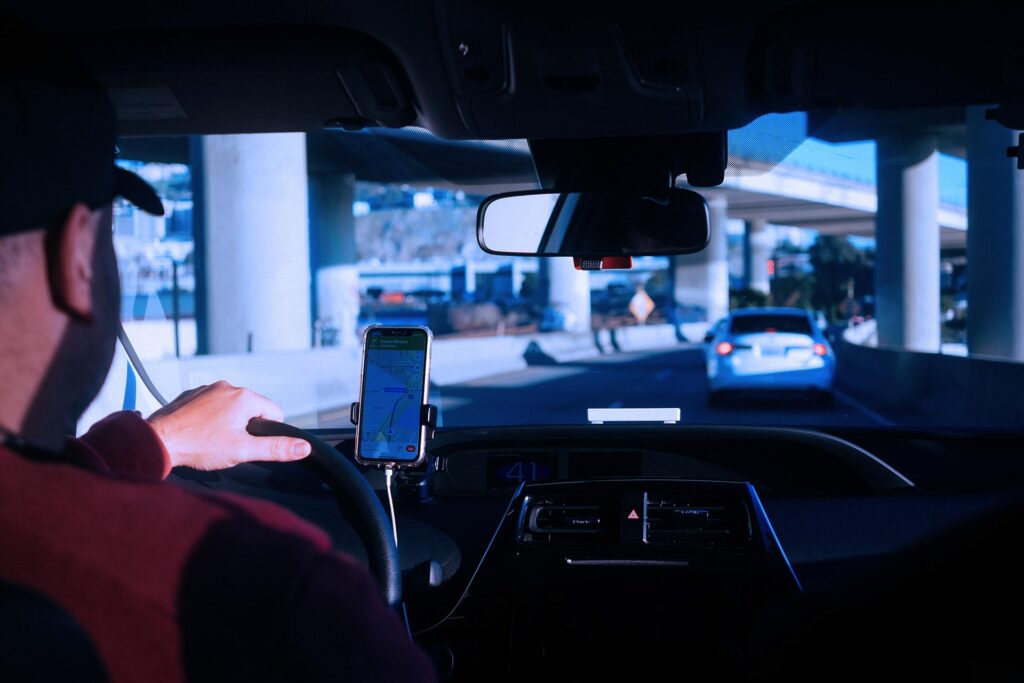
If you were hit by an Uber or Lyft driver who had the app open but hadn’t accepted a ride, you may have already discovered a frustrating reality: both the driver’s personal insurer and the rideshare company’s insurer are pointing fingers at each other, and neither wants to pay your claim. This is not a mistake or an unusual situation. It is a structural gap in how rideshare insurance works, and it affects thousands of accident victims every year.
You may not even know which “period” your accident falls under and that uncertainty is part of the problem. If the driver had already accepted a ride or had a passenger in the car, your situation involves different coverage entirely. For those cases, see our full Uber and Lyft accident guide. But if the driver’s app was on and they were waiting for a ride request, keep reading. This article explains why your claim was denied, what coverage actually exists, and what you can do about it.
The Coverage Gap, Explained
Uber and Lyft’s insurance systems divide every driver’s shift into coverage periods based on what the driver is doing at the exact moment of an accident. The period that matters most for denied claims is Period 1: the driver has the app on and is waiting for a ride request, but has not yet been matched with a passenger.
This distinction matters because each period triggers a completely different level of insurance coverage:
| Period | Driver Status | Coverage | Who Pays First |
|---|---|---|---|
| Period 0 | App off | Driver’s personal auto insurance only. Rideshare company has no involvement. | Driver’s personal insurer |
| Period 1 | App on, waiting for a ride request | Limited liability: $50,000 per person, $100,000 per accident, $25,000 property damage. Coverage is contingent — only activates if the driver’s personal insurer denies first. | Driver’s personal insurer first, then rideshare company’s contingent policy |
| Period 2 | Ride accepted, en route to pickup | $1,000,000 in liability per accident | Rideshare company’s commercial policy |
| Period 3 | Passenger in car | $1,000,000 in liability per accident | Rideshare company’s commercial policy |
The gap between Period 1 and Period 2 is enormous. A driver waiting for a ping has one-twentieth the liability coverage of a driver who accepted a ride five seconds earlier. If you were seriously injured in a Period 1 accident, $50,000 may not come close to covering your medical bills, let alone lost wages or long-term treatment.
One important detail for Nevada: Uber and Lyft do not currently provide uninsured/underinsured motorist (UM/UIM) coverage for drivers in Nevada during any period, even though some of their national marketing materials reference it. Nevada law does not require rideshare companies to offer UM/UIM coverage (NRS 690B.470). This makes your own UM/UIM policy significantly more important, as discussed below.
Why Both Insurers Deny Your Claim
The reason you are getting the runaround from both insurers is not random. It is built into Nevada law.
The driver’s personal insurer denies because: Under NRS 690B.480, a personal auto insurance policy in Nevada is not required to cover rideshare activity. The statute is explicit: an insurer that excludes TNC (transportation network company) coverage does not have a duty to defend or indemnify a driver for any claim arising while the driver is logged into the app. Most personal auto insurers in Nevada treat any rideshare activity as a commercial use exclusion and will deny the claim the moment they learn the driver had the Uber or Lyft app open.
The rideshare company’s insurer denies or minimizes because: The Period 1 coverage is contingent. It is designed as a backstop, not primary coverage. The $50,000/$100,000/$25,000 limits are the minimum required by NRS 690B.470(1)(b), and rideshare companies provide exactly those minimums. The rideshare insurer will often investigate whether the driver’s personal policy should cover the claim first, creating delays.
The result: you are caught between two insurers, each with a legal basis to limit or deny coverage, while your medical bills accumulate.
What Changed In 2025: Assembly Bill 523
What changed: Nevada’s Assembly Bill 523, effective October 1, 2025, reduced required rideshare insurance for Periods 2 and 3 from $1,500,000 to $1,000,000 per accident and added a vicarious liability shield for rideshare companies.
What didn’t change: Period 1 minimums ($50,000/$100,000/$25,000) were not affected.
What it means for you: If your accident occurred after October 1, 2025, Uber and Lyft cannot be held vicariously liable for their drivers’ conduct as long as the required insurance is in place. Pursuing the rideshare company directly now requires proving independent company liability, such as negligent hiring or screening failures, rather than simply holding them responsible for the driver’s actions.
When Period 1 Claims Are Strong Vs. Weak
Not every Period 1 accident creates the same legal situation. Being honest about the strength of your claim helps you make better decisions.
Your claim may be stronger if:
- Medical expenses exceed $50,000 — this creates an underinsured situation where additional recovery strategies become necessary
- The driver was clearly at fault — ran a red light, was distracted, violated traffic laws, making liability straightforward
- You have scene documentation — photos, witness information, a police report identifying the rideshare driver as at-fault
- The driver carried a rideshare endorsement on their personal policy, which some Nevada insurers like GEICO and Farmers offer as an add-on
- You have your own UM/UIM coverage that may apply to the gap between Period 1 limits and your actual damages
Your claim may face challenges if:
- Your injuries are minor and the $50,000 per-person limit is sufficient to cover your damages, the Period 1 coverage may actually resolve your claim without additional legal strategies
- Fault is disputed or shared — Nevada follows a modified comparative negligence rule under NRS 41.141: if you are found more than 50% at fault, you recover nothing, and even partial fault reduces your recovery proportionally
- The driver’s period status is uncertain — if the driver had accepted a ride moments before the crash, $1,000,000 in coverage applies instead of $50,000, but Uber’s app data determines which period applies, and accessing that data typically requires legal action
That last point is worth emphasizing: in some cases, Uber or Lyft’s own internal data reveals the driver had actually accepted a ride just before the collision, which triggers 20 times more coverage. Confirming the driver’s exact status at the moment of impact is one of the most important steps in a Period 1 dispute.
What To Do If Your Period 1 Claim Was Denied
Step 1: Identify Which Insurer Denied And Why
Get the denial in writing. The denial letter should specify whether the claim was denied based on a commercial use exclusion in the driver’s personal policy, a determination that the accident falls outside the rideshare company’s coverage obligations, or a dispute about the driver’s status (which period they were in). The reason for the denial determines your next move.
Step 2: Check Your Own Insurance
Your own auto insurance policy may provide coverage the other insurers will not. Specifically:
Uninsured/underinsured motorist coverage (UM/UIM): If the at-fault rideshare driver’s available coverage is insufficient to cover your injuries, your own UM/UIM policy may cover the gap. This is one of the most important coverages for Period 1 accident victims. Because Uber and Lyft do not currently provide UM/UIM coverage in Nevada, and the $50,000 per-person Period 1 limit is low enough that many serious injuries will exceed it, your personal UM/UIM policy may be the most significant source of additional recovery available.
MedPay (medical payments coverage): Under NRS 687B.145, Nevada auto insurers must offer at least $1,000 in MedPay. If you carry MedPay, it covers your medical expenses regardless of who was at fault.
Step 3: Preserve The Rideshare Company’s App Data
The single most important piece of evidence in a Period 1 dispute is the rideshare company’s internal data showing the driver’s status at the time of the accident. This data shows whether the driver was in Period 1, 2, or 3 — and the difference means $50,000 versus $1,000,000 in available coverage. Neither Uber nor Lyft is required to preserve this data indefinitely, so requesting it early, ideally through legal counsel, is critical.
Step 4: Evaluate Whether The Driver Has Additional Coverage
Rideshare endorsement: If the driver carried a rideshare endorsement on their personal policy, there may be additional coverage available beyond the Period 1 minimums. Some Nevada insurers, including GEICO and Farmers, offer these endorsements.
Personal assets: If the driver has personal assets, a direct negligence claim against the driver (separate from any insurance claim) is a potential avenue of recovery, though it requires evaluating whether the driver has assets worth pursuing.
Step 5: Determine If The Rideshare Company Has Independent Liability
While AB 523 shields Uber and Lyft from vicarious liability for driver conduct, these companies can still be held liable on independent grounds. If the company failed to screen a driver with a dangerous driving history, or if its policies contributed to the accident, those are separate claims from vicarious liability. Establishing this requires investigation into the driver’s background and the company’s screening process.
When To Get Legal Help
Period 1 coverage disputes involve multiple insurers, statutory minimums, and complex questions about driver status that most people cannot resolve on their own. These disputes typically involve weeks or months of back-and-forth between insurers before coverage responsibility is resolved, and having legal representation during this process prevents delays from becoming permanent denials.
If any of the following apply to your situation, consult with an attorney before accepting any settlement:
- Your medical bills exceed $50,000. The Period 1 coverage limits may not cover your damages, and you need to identify all available sources of recovery.
- The rideshare company or the driver’s insurer disputes the driver’s status. Determining whether the driver was in Period 1 or Period 2 at the time of the crash requires the company’s internal app data, which typically requires legal action to obtain.
- You received a quick settlement offer. An early offer from the rideshare insurer may not account for the full extent of your injuries, especially if symptoms develop or worsen over time.
- Fault is being disputed. Under Nevada’s comparative negligence law, the at-fault party’s insurer may attempt to assign you a share of fault to reduce their payout.
- You already accepted a settlement and later realized your injuries were more serious than expected. An attorney can evaluate whether any additional recovery options remain available based on the specific terms of what you signed and the circumstances of your case.
Watch The Clock
Nevada requires personal injury claims to be filed within two years from the date of the accident (NRS 11.190). This deadline applies regardless of whether insurance negotiations are ongoing. If the statute of limitations (the legal deadline for filing a lawsuit) expires, you lose the right to file, no matter how strong your claim.
Talk To Jack About Your Situation
Period 1 coverage disputes require understanding the intersection of Nevada rideshare insurance law, multiple insurance policies, and the specific facts of your accident. With 40+ years as a personal injury attorney, Jack Bernstein understands how to identify every available source of coverage, obtain the rideshare company’s app data to confirm the driver’s status, and pursue recovery beyond the Period 1 minimums when the situation calls for it. If you were hit by an Uber or Lyft driver whose app was on, or if your rideshare accident claim has been denied, contact Jack Bernstein Injury Lawyers for a free consultation: (702) 633-3333.