If someone you love died in Las Vegas because of another person’s carelessness, you are likely being pulled in three directions at once: the coroner’s office, an insurance adjuster, and the question of who in your family is even allowed to act. This page is built to give you your bearings: what a Nevada wrongful death case actually is, whether you are the right person to bring it, and the few things that have to happen quickly so that nothing irreversible closes a door you didn’t know was open.
Start where you are:
- If this just happened (the last few days) and the coroner or an insurance adjuster has already called → read The First Days: What to Protect Right Now first.
- If you’re not sure you’re even allowed to file → read Who Can Bring a Wrongful Death Claim in Nevada.
- If you’re trying to understand the case and what it’s worth → read Nevada Wrongful Death Is Not One Claim, It’s Up to Three.
- If the coroner called it “natural causes” or “undetermined” and that doesn’t match what your family saw → read The Coroner Said Natural Causes. Is the Case Over?.
What You Need to Know
A Nevada wrongful death case is not a single lawsuit. It can be up to three parallel claims. Under NRS 41.085, the statutory heirs hold one claim (for their own grief, lost support, and companionship), the estate holds a second (for funeral and pre-death medical bills, plus any punitive damages), and a separate survival action under NRS 41.100 carries the claim the person who died could have brought themselves. Pursuing only one can leave the categories the others cover on the table.
Who is an “heir” is defined by Nevada inheritance law, not by who is handling the funeral. An heir is the person who would inherit the decedent’s separate property if there were no will. That is typically a spouse or registered domestic partner, then children, then parents. The person organizing arrangements is often not the same person with standing to recover.
The deadline is two years, and for a wrongful death it generally runs from the date of death, not from the accident and not from the coroner’s report (NRS 11.190(4)(e)). Medical-related deaths follow a different, shorter discovery clock.
The first 30 to 60 days decide more than most families realize. A coroner’s “natural causes” finding does not settle civil liability; the at-fault party’s primary insurance is often the smallest layer of available coverage; and a quick “release” from an adjuster can quietly wipe out the survival action before anyone has counted the cost.
You do not have to know which claim is which to protect your family’s rights, but you do have to act before the deadline runs or a signature forecloses a claim. A consultation costs nothing.
Protecting Your Rights For Over 40 Years.
Why Hire Jack Bernstein Injury Lawyers?
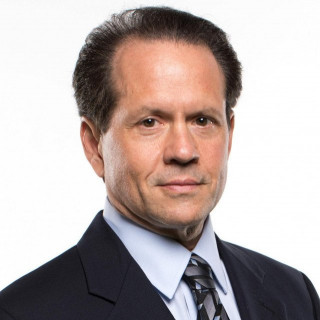
Jack G. Bernstein, Esq. has been protecting the rights of injured victims and their families for over 40 Years.
What Our Clients Say
Justice pays but only when you have a legal team that truly represents your interest. This is exactly what I got from Jack Bernstein and his legal team. The staff are very professional and compassionate. I will definitely recommend them to anyone at their time of need.
– Betty Lopez
The First Days: What to Protect Right Now
If the death is recent, the most useful thing this page can do is tell you the small number of things that are time-sensitive, so you can set the rest aside while you grieve.
The reason early action matters is structural, not dramatic: evidence in these cases degrades on its own schedule, and some of the most important proof is controlled by people who are not on your side. Surveillance video is overwritten on a cycle. Vehicles get repaired or scrapped. An autopsy, if one is needed to establish what actually caused the death, is most useful when it happens within roughly the first day or two. None of these wait for a family to finish making arrangements.
A short, practical list of what to protect early:
- Preserve, don’t repair or release. Keep the vehicle, the equipment, the clothing, or the scene as undisturbed as possible, and do not authorize repairs or disposal of anything connected to the death until someone has evaluated it.
- Write down what you saw and were told. Names of witnesses, what staff or officials said at the scene, the timeline as you experienced it. Memory fades and staff turn over.
- Be careful with the early phone call. An adjuster who calls “to check on you” in the first days is gathering a recorded statement, not offering condolences. You are not required to give one, and you are not required to sign anything.
- Ask about an independent autopsy before it’s too late if the cause of death is in any doubt. A privately retained forensic pathologist can preserve evidence the official process may not, and timing matters. This is the subject of a dedicated guide on the independent autopsy.
What this means for you: You do not have to understand the law in the first week. You do have to keep things from being thrown away, repaired, or signed. Those are the moves that cannot be undone later.
If a family member died and an insurance company or the coroner has already made contact, talking through your specific situation early, before evidence is gone or a document is signed, is the single highest-value step you can take. A consultation is free.
Who Can Bring a Wrongful Death Claim in Nevada
The first question many families ask is not “do we have a case” but “am I even the right person to do something about it.” Nevada answers that question by statute, and the answer is more specific than most people expect.
Nevada law gives standing to two categories of people: the decedent’s heirs and the decedent’s personal representative (the person who administers the estate). Under NRS 41.085, “the heirs of the decedent and the personal representatives of the decedent may each maintain an action for damages against the person who caused the death.” They are not the same role, and they recover different things.
Here is the part that surprises families: an “heir” is not defined by who was closest to the person, who is paying for the funeral, or who is named in a will. The statute defines an heir as a person who “would be entitled to succeed to the separate property of the decedent if the decedent had died intestate.” In plain terms, those are the people Nevada’s inheritance rules would recognize if there were no will at all. In practice that usually means:
- A surviving spouse or registered domestic partner
- The decedent’s children
- The decedent’s parents, where there is no spouse or children
- Other next of kin, in the order Nevada’s intestacy rules set
Because standing flows from inheritance status, the category can be both narrower and broader than families assume. It can exclude a devoted partner who was never married or registered. It can include a child whose relationship was legal rather than biological. Nevada has recognized, for example, that an equitably adopted child may qualify as a statutory heir (Bower v. Landa, 78 Nev. 246, 371 P.2d 657 (1962)). And it means the person organizing the memorial is frequently not the person with the strongest claim.
What this means for you: Before anyone assumes they can’t act, or that someone else “has it handled,” it’s worth confirming who the statute actually recognizes. The person who feels responsible and the person with legal standing are often two different people, and getting that wrong wastes time you may not have. Situations involving unmarried partners, out-of-state or international families, or disputes among relatives have their own paths, covered in the guide for unmarried partners and the guides for out-of-state executors and international families.
One more thing worth knowing early, because it changes how a family should coordinate: Nevada treats the heirs’ claims as their own, individual claims. A Nevada Supreme Court decision held that an heir who never signed a contract (such as an arbitration agreement the person who died had signed) is not automatically bound by it, because the heir is pursuing a separate, individual right (El Jen Medical Hospital, Inc. v. Tyler, 139 Nev. Adv. Op. 36 (2023)). That separateness is the thread that runs through the rest of this page.
Nevada Wrongful Death Is Not One Claim, It’s Up to Three
This is the single most important idea on this page, and it is the one the typical “wrongful death” overview skips. In Nevada, a death caused by negligence can generate three distinct claims, each with a different owner and a different set of recoverable damages. Treating it as one lawsuit is how money that belongs to a family gets left behind.
The three claims are:
| The claim | Who owns it | What it recovers | Authority |
|---|---|---|---|
| The heirs’ wrongful death claim | Each statutory heir, individually | The heirs’ own losses: grief or sorrow, loss of probable support, loss of companionship, society, comfort and consortium, and the decedent’s pain, suffering, or disfigurement | NRS 41.085(4) |
| The estate’s wrongful death claim | The personal representative, for the estate | Special damages such as pre-death medical bills and funeral expenses, plus any punitive (exemplary) damages the decedent could have recovered | NRS 41.085(5) |
| The survival action | The estate, stepping into the decedent’s shoes | The claim the decedent could have brought if they had lived: their pre-death losses, including conscious pain and suffering before death | NRS 41.100 |
A few distinctions inside that table do real work:
Heirs and the estate recover different things, and the line is exact. The statute gives heirs their grief, lost support, and companionship under subsection (4). It gives the estate the special damages and any punitive damages under subsection (5). But subsection (5) expressly says the estate’s recovery does “not include damages for pain, suffering or disfigurement of the decedent.” Under subsection (4), that pain-and-suffering-of-the-decedent piece is recoverable by the heirs, alongside their own grief, lost support, and companionship; the survival action, separately, carries what the decedent endured before death. Punitive damages, by contrast, run only to the estate’s claim, not to the heirs.
There’s a creditor consequence built into the statute. Money awarded to heirs under subsection (4) is, by the statute’s own terms, “not liable for any debt of the decedent.” Money recovered by the estate is. That single difference can decide how much a family actually keeps after a death’s bills are paid. That is why how a recovery is structured across the three claims is not a technicality.
The survival action is genuinely separate. It is not a remedy for the death; it is the decedent’s own injury claim, surviving them. NRS 41.100 provides that “no cause of action is lost by reason of the death of any person,” and it carries the conscious pain and suffering the person experienced before they died, something the estate’s wrongful death claim cannot reach. The deeper comparison, including how that suffering is proven, lives in the guides on survival actions versus wrongful death and proving conscious pain and suffering.
Nevada law lets these be brought together. The heirs’ action and the decedent’s surviving claim “which arose out of the same wrongful act or neglect may be joined” (NRS 41.085(3)). The point of coordinating them is not procedure for its own sake; it is making sure no category quietly goes unclaimed.
What this means for you: If a family settles “the wrongful death case” without accounting for all three claims, it can sign away the survival action’s pain-and-suffering recovery, the estate’s punitive exposure, or the creditor protection that comes with the heirs’ share. Knowing the three exist is what lets you ask whether all three are being pursued.
Where the Money Actually Comes From
Most families look at the at-fault party’s insurance policy, see a number, and assume that number is the ceiling. In serious cases it is frequently the floor.
The recovery in a wrongful death case is usually assembled from a stack of coverage layers, and the at-fault party’s primary policy is often the smallest one. Depending on the facts, the layers that can apply include an umbrella policy over the at-fault individual; a commercial or fleet policy if a business vehicle or employee was involved; the coverage of additional responsible parties most families never identify on their own; and, frequently overlooked, the decedent’s own underinsured motorist (UM/UIM) coverage, which in Nevada can stack on top of the at-fault driver’s policy (NRS 687B.145). Identifying every layer is much of the work in a high-value case, and it is exactly the work an early, low offer is designed to short-circuit.
This page deliberately does not put a dollar figure on a Nevada wrongful death case, because an honest number depends entirely on the facts: the coverage available, the decedent’s earnings and dependents, and the strength of the liability proof. What the recovery is built from, and how to think about its value, are covered in the dedicated guides on how much a wrongful death case is worth and the wrongful death settlement calculator. The split between the heirs’ and the estate’s recovery, including how funeral and probate costs are handled, is covered in the guide to recovering funeral and probate costs.
What this means for you: When an adjuster points to the primary policy limit as if it were the whole story, that is a starting position, not a fact about your case. The question worth asking is not “what is the policy” but “what are all the policies, and who else is responsible.”
The Coroner Said Natural Causes. Is the Case Over?
For many families, the moment that feels like the end is a death certificate or coroner’s report that reads “natural causes,” “pre-existing condition,” or “undetermined.” If that conclusion does not match what your family witnessed, the case is not necessarily over.
The reason is a distinction the official paperwork does not explain: a coroner or medical examiner answers a medical question (what, biologically, caused this person to die), while a civil claim turns on a legal question (did someone’s negligence play a substantial role in the death). Those are not the same test, and a finding on the first does not decide the second.
Two well-established Nevada doctrines are why:
- The substantial factor test. A defendant’s negligence does not have to be the only cause of a death to support liability. It has to be a substantial factor in bringing it about. A person can die of a heart attack, and a negligent party can still be legally responsible if their conduct was a substantial factor in triggering it.
- The eggshell plaintiff doctrine. A defendant takes the victim as they find them. A pre-existing condition that made someone more vulnerable does not excuse the negligence that pushed them over the edge; it does not reduce the wrongdoer’s responsibility.
This is also where the timing in the first days pays off. Where the cause of death is genuinely disputed, a privately retained forensic pathologist can examine the evidence and document findings the official process may not pursue, and that examination is most effective early. The full mechanics, and when it’s worth doing, are in the guide to the independent autopsy in disputed cases.
What this means for you: A “natural causes” or “undetermined” finding is evidence, not a verdict on liability. If the medical conclusion doesn’t fit what your family saw, that gap is a reason to have someone evaluate the case, not a reason to walk away from it.
What the Insurance Company Is Doing in the First Weeks
Plaintiff-side practice in these cases is, in large part, the practice of recognizing what the other side does early, because the other side is working from the moment a death is reported, and the family usually is not.
A few patterns are worth naming plainly, because they are how recovery gets reduced or lost before a case ever begins:
- The quick “release.” An early settlement offer often comes attached to a release written broadly enough to extinguish more than the heirs’ claim. Because the survival action is a separate claim (NRS 41.100), a broad release signed in the first weeks (before anyone has valued the survival claim, identified every coverage layer, or measured the future losses) can sign away claims the family did not know they had. There is no undo on a signed release.
- The recorded statement. A friendly call in the first days, asking how you’re holding up and what happened, is an evidence-gathering event. Answers given while grieving and uninformed are used later to build a comparative-fault narrative.
- Comparative-fault inflation. Nevada is a modified comparative negligence state. Recovery is reduced by the decedent’s share of fault and is barred only when that share is greater than the combined negligence of the parties the family is seeking recovery from (NRS 41.141). This is the threshold commonly described as the 51% bar. That is precisely why an adjuster has an incentive to build a story that inflates the decedent’s fault before the family has retained anyone to reconstruct what really happened. (How comparative fault works in detail is covered in the guide to Nevada’s modified comparative negligence law.)
What this means for you: The most damaging mistakes in a wrongful death case are usually made in the weeks before a lawyer is involved: a recorded statement given, a release signed, a vehicle scrapped. You don’t need to outmaneuver an insurance company. You need to not hand it anything irreversible while you decide what to do.
How Long You Have to Act
Of everything on this page, the deadline is the one that forgives nothing.
The general rule: a Nevada wrongful death claim must be filed within two years, and for a wrongful death that clock generally runs from the date of death, not from the date of the accident, and not from the date the coroner issues a report. The governing statute, NRS 11.190(4)(e), sets a two-year limit for “an action to recover damages for injuries to a person or for the death of a person caused by the wrongful act or neglect of another.”
Two important wrinkles:
- There are narrow exceptions, and they are narrow. Nevada recognizes a limited discovery rule that can delay the start of the clock in specific circumstances, but Nevada courts read it tightly. It is not a general extension, and no family should plan around it. The boundaries are covered in the guide to how statutes of limitations affect wrongful death lawsuits.
- Deaths involving medical care follow a different clock. When the death arises from the care of a health care provider, a separate medical-malpractice limitations rule applies, with its own shorter timeframe and discovery analysis. If the death involved hospital, physician, or facility care, the deadline may be sooner than two years, which is a reason to get the timing checked, not assumed. (Whether a doctor can be sued for a patient’s death is addressed in the guide on suing a doctor for wrongful death.)
What this means for you: Treat the two-year date-of-death deadline as the real one and have it confirmed for your specific facts immediately, because the exceptions that might extend it are unreliable and the medical-care exception can make it shorter. The deadline is the one mistake on this page that no amount of later effort can fix.
How to Choose a Wrongful Death Firm: What to Ask
Once a family understands the shape of the case, the next decision is who to trust with it. Wrongful death is a high-stakes, document-heavy area, and not every firm is built for it. A useful way to evaluate any firm (not just this one) is to ask questions that track the substance above:
- “How will you make sure all three claims are pursued (the heirs’ claim, the estate’s claim, and the survival action)?” A firm that talks only about “the wrongful death case” as a single thing may leave categories unclaimed.
- “How do you identify every layer of available coverage?” The answer should go well beyond the at-fault party’s primary policy.
- “What needs to be preserved right now, and who is doing it?” Evidence and autopsy timing are urgent; the answer should be specific.
- “If the coroner’s finding is disputed, how do you establish causation?” You want to hear substantial factor, eggshell plaintiff, and independent forensic review, not a shrug.
- “How is the case staffed, and who will actually handle it?” It is fair to ask whether a named attorney will be involved in your case or whether it will be passed to a rotating cast.
Each of those questions traces to something concrete on this page, which is the point: a firm worth hiring should be able to answer them in terms of your situation. A free consultation is the place to ask all of them.
If You Were Injured in Las Vegas
Some deaths that lead to a wrongful death case have a more specific legal home, and that home is where the deepest help lives. If the death involved a commercial truck or fleet vehicle, the federal regulatory layer and multi-defendant insurance structure are handled on the Las Vegas truck accident page. If the death followed a catastrophic injury before it became fatal, the Las Vegas catastrophic injury page addresses the long-horizon damages those cases carry. Specific causes have their own guides as well. For example, whether you can sue for wrongful death after a car accident.
For families in the wider service area, the same Nevada law applies whether the death occurred in Las Vegas proper, Henderson, Summerlin, Boulder City, or Pahrump. Wrongful death sits within the firm’s broader Las Vegas personal injury practice.
Talk to Jack Bernstein Injury Lawyers
Losing a family member to someone else’s negligence forces decisions no one is ready to make, on a clock no one asked for. With over 40 years as a personal injury attorney and more than $500 million recovered in verdicts and settlements, Jack Bernstein understands how a Nevada wrongful death case actually works: the three separate claims, the coverage layers most families never find, and the early moves that protect a recovery before a deadline or a signature closes it off. Jack is personally involved in every case. If a family member has died in circumstances you believe were caused by another’s negligence, Jack Bernstein Injury Lawyers offers a free consultation to evaluate who has standing, which claims apply, and the time-sensitive steps that remain, with No Fees Unless We Win. Because the deadline for most Nevada wrongful death claims is two years from the date of death (and some related deadlines are shorter), it is worth confirming your timeline now rather than later. Call (702) 633-3333.