When a car strikes someone on foot in Las Vegas, the first thing the driver’s insurer tries to establish is that the pedestrian was in the wrong place: outside the marked lines, mid-block, against the signal, “jaywalking.” That framing is how many pedestrian cases are quietly defeated before they start, and it is usually wrong about what Nevada law actually says. This page lays out what the law really requires, whether you were the one hurt or you are here for a family member who was.
What You Need to Know
- Where you were crossing does not decide whether you have a case; it decides your share of fault. That is a very different thing, and it is usually the whole fight.
- An unmarked crosswalk exists at virtually every intersection. Under NRS 484A.065, crossing at a corner without painted lines is usually still crossing in a crosswalk, and the driver still has to yield to you under NRS 484B.283.
- The driver owes you due care even when you did not have the right of way. Under NRS 484B.280, a driver must slow, sound the horn when needed, and use caution on seeing a pedestrian, even one crossing improperly.
- Jaywalking is no longer a crime in Nevada. It was decriminalized in 2021 and is now a civil infraction carrying a penalty of about $100, so “you were jaywalking” is a comparative-fault argument, not a legal bar.
- Partial fault does not end your claim. Under Nevada’s modified comparative negligence rule (NRS 41.141), you recover unless your own fault is greater than the combined fault of everyone else; below that line, your recovery is reduced by your percentage.
- The biggest source of money is often your own coverage. A pedestrian struck by a car can usually tap their own (or a household member’s) uninsured/underinsured motorist coverage, which reaches you even though you were on foot.
- The evidence is on a short clock, and the deadline is firm. Intersection cameras, signal-timing data, and witness memories start disappearing within days. Nevada gives you two years from the injury to file (NRS 11.190(4)(e)), and a fatal pedestrian death is a separate wrongful death claim with its own two-year deadline.
Why Hire Jack Bernstein Injury Lawyers?
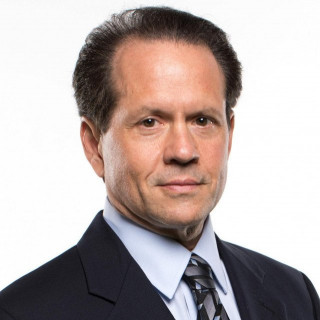
Jack G. Bernstein, Esq. has been protecting the rights of injured victims and their families for over 40 Years.
What Our Clients Say
When my Dad was involved in an accident, we called Jack because we knew he’d have our back! Jack and his team were dedicated, attentive and worked tirelessly to get my father the outcome he deserved. I highly recommend Jack Bernstein to anyone in need of an injury attorney!
– Philip Stekol
Can I Still Sue If I Was Jaywalking or Crossing Outside the Crosswalk?
In most cases, yes. Where you were crossing affects how fault is divided; it does not automatically end your claim.
This is the single most common reason injured pedestrians never call a lawyer, and it rests on a misunderstanding of two things: what counts as a crosswalk, and what “jaywalking” actually means in Nevada today.
Most intersections have a crosswalk even with no paint on the ground. Under NRS 484A.065, a “crosswalk” includes the part of the road at an intersection that connects the sidewalk lines on either side, whether or not it is marked with lines. So if you were crossing at a corner, you were very likely crossing in a legal crosswalk, even if there was no painted box, no signal, and no sign. People describe this as “jaywalking” all the time when, legally, it was nothing of the kind.
Jaywalking is no longer a crime in Nevada. In 2021, the Legislature passed AB403, which reclassified crossing outside a crosswalk from a misdemeanor to a civil infraction. Before that change, it carried the possibility of jail time and a fine of up to $1,000; now the penalty is a civil one capped at roughly $100. That matters for your case because of what it means and what it does not mean. It does not mean crossing mid-block is risk-free or always permitted. It does mean that an insurance adjuster who says “you were jaywalking, so you get nothing” is not stating a rule of law; they are making a comparative-fault argument designed to reduce or eliminate the payout.
The difference between a legal bar and a fault argument is the whole case. A legal bar ends the claim. A fault argument is a negotiation about percentages, and in Nevada the math of those percentages usually still leaves room to recover.
Who Has the Right of Way? Marked vs. Unmarked Crosswalks in Nevada
The driver’s duty to yield is broader than most people think, and it does not switch off the moment the painted lines end.
Nevada’s pedestrian right-of-way rules live mainly in NRS 484B.283. Here is what the statute actually requires.
At a crosswalk with no working signal, the driver must yield to you. When traffic-control devices are not in place or not operating, NRS 484B.283 says the driver “shall yield the right-of-way, slowing down or stopping if need be,” to a pedestrian crossing within a crosswalk, when the pedestrian is on the driver’s half of the road or close enough from the other half to be in danger. Because an unmarked crosswalk exists at virtually every intersection (NRS 484A.065), this duty covers far more crossings than the painted ones.
A driver cannot pass another car that has stopped at a crosswalk. The same statute prohibits a driver from overtaking and passing a vehicle stopped at a marked or unmarked crosswalk until the driver confirms the stopped vehicle was not yielding to a pedestrian. This is the legal basis for the classic “the first car stopped for me and the second car in the next lane didn’t” collision, a frequent fact pattern on multi-lane Las Vegas arterials.
Signal rules are specific. When “Walk” / “Don’t Walk” signals are present, NRS 484B.283 spells out the timing. While the “Walk” signal is showing, you may cross and drivers must yield. If you lawfully entered on a “Walk” signal and the countdown then runs out while you are still in the road, the statute still allows you to finish crossing; you are not suddenly in the wrong for being mid-street when the timer hit zero. Adjusters routinely argue the opposite; the statute does not support them.
The table below summarizes who is generally expected to yield in the common Las Vegas crossing scenarios. It describes the default duties; actual fault always depends on the specific facts.
| Crossing scenario | Is it a crosswalk? | Who generally must yield |
|---|---|---|
| Marked crosswalk, “Walk” signal showing | Yes (marked) | Driver yields to pedestrian |
| Intersection corner, no painted lines, no signal | Yes (unmarked, per NRS 484A.065) | Driver yields to pedestrian |
| Mid-block, between two signalized intersections | No | Pedestrian yields to traffic (NRS 484B.287), but driver still owes due care |
| Crossing against a “Don’t Walk” signal | Within the crosswalk, but against the signal | Pedestrian at fault for the signal; driver still owes due care |
| Driver passing a car stopped at a crosswalk | N/A | Passing driver must not overtake until clear (NRS 484B.283) |
Does Being Partly at Fault Block My Case? Nevada’s Comparative-Fault Rule
Partial fault reduces what you recover; it does not erase your claim unless your share is the larger one.
This is where the “you were in the wrong place” argument actually gets resolved. Nevada uses modified comparative negligence under NRS 41.141. The statute does not contain the number “51%”; what it says is that a plaintiff may recover as long as their negligence “is not greater than the negligence or gross negligence” of the defendants. The practical translation: if your share of the fault is greater than the combined fault of everyone else, you recover nothing. If it is not greater, you recover, reduced by your own percentage.
Two points commonly get this wrong, both in the reader’s favor:
- Your fault is compared to the combined fault of all responsible parties, not just one. If a driver was speeding and a property owner left a streetlight broken at the crossing, your conduct is weighed against the sum of theirs, not against the driver alone. The more responsible parties there are, the harder it is for any single comparison to push you over the line.
- The reduction is proportional, not all-or-nothing. If you are found 20% at fault for crossing where you did and your damages are otherwise established, you do not lose the case, your recovery is reduced by that 20%.
Consider a hypothetical. A pedestrian crosses at an intersection corner with no painted lines, against a “Don’t Walk” signal, and is struck by a driver who was going well over the limit and looking at a phone. An insurer might argue the pedestrian was substantially at fault for the signal. But because the corner is still an unmarked crosswalk, the driver still owed a yield duty and a separate duty of due care, and the speeding and distraction weigh heavily on the driver’s side. A jury could assign meaningful fault to the pedestrian and still leave recovery intact, reduced by the pedestrian’s share. This is a hypothetical example for illustrative purposes only. Actual case outcomes depend on specific facts, evidence, and circumstances.
There is one more duty most readers never hear about. Under NRS 484B.280, a driver must exercise due care to avoid colliding with any pedestrian, must sound the horn when necessary, and must use proper caution upon seeing a pedestrian on or near the road, regardless of who had the right of way. So even in the case where you genuinely did not have the right of way, the driver’s failure to pay attention and avoid you remains part of the fault picture. “He darted out” is a story; the driver’s duty of care is the law.
Who Pays When a Car Hits a Pedestrian in Las Vegas?
The recovery is almost never built on the driver’s insurance alone. It is built on a stack of coverage, and the layer most people don’t know about is their own.
Pedestrian-versus-vehicle injuries tend to be severe (broken bones, head injuries, long hospital stays), and the medical bills routinely outrun the at-fault driver’s policy, which is often written at or near the Nevada minimum. A real recovery usually means identifying every applicable layer. The common ones:
| Coverage layer | Where it comes from | When it matters |
|---|---|---|
| At-fault driver’s bodily injury (BI) | The driver who hit you | The first layer, but frequently the smallest against catastrophic bills |
| Your own (or a household member’s) UM/UIM | Your auto policy, reaches you as a pedestrian | When the driver is uninsured, underinsured, or fled; this is the layer most people miss |
| Commercial / rideshare coverage | The striking vehicle, if it was a work vehicle, delivery driver, or rideshare on a trip | Often far higher limits than a personal policy |
| Hit-and-run (UM) | Your own UM coverage steps in for an unidentified driver | When the driver flees and is never found |
The single most important thing to understand is the second row. Uninsured and underinsured motorist coverage in Nevada is not tied to the car you were driving; it follows you. If you, or a relative you live with, carry UM/UIM on an auto policy, that coverage can apply when you are struck on foot. And Nevada allows you to “stack” UM/UIM limits across multiple vehicles on a household policy, which can multiply the money available in a serious case. Many injured pedestrians assume that because they were walking, their car insurance is irrelevant. The opposite is frequently true; it is often the largest pool of money in the case.
If the driver who hit you was working, driving for a rideshare or delivery app, operating a commercial vehicle, or on the job, there may be substantially larger commercial coverage in play. The page on Las Vegas car accident claims covers how driver-side fault and vehicle coverage are established in detail.
What the Insurance Adjuster Is Doing in the First 48 Hours
The fault narrative in a pedestrian case is usually built in the first two days, by the other side, before you have talked to anyone.
A pedestrian claim is won or lost less on the statute than on the evidence and the story attached to it, and the adversary moves first. In the days after a crash, an adjuster for the driver’s insurer will often call “to check on how you’re doing.” It is a friendly call with a specific purpose: to lock in a recorded statement before you have legal advice, and to seed the “darting out” or “out of the crosswalk” narrative. Questions are calibrated to produce damaging admissions: where exactly were you, were you looking at your phone, are you feeling better today (used later to minimize injuries).
Meanwhile, the evidence that would establish what actually happened is on a timer:
- Within the first week. Intersection and business security cameras often overwrite footage on a short cycle. A casino or store may keep it only days unless someone formally asks them to preserve it.
- Within days to weeks. Traffic-signal timing data and any vehicle event-data-recorder (“black box”) information can be lost or overwritten if no one moves to capture it.
- As time passes. Independent witnesses who stopped at the scene disperse, and memories fade.
This is why “I’ll just deal with it later” is the costliest mistake in a pedestrian case. By the time the medical picture is clear enough that the bills feel urgent, the footage that would have shown the driver running the signal may be gone. The earlier the preservation requests go out, the more of the real story survives. Until you have spoken with someone on your side, it is reasonable to decline to give a recorded statement to the other driver’s insurer.
If a Pedestrian Was Killed: This Is a Wrongful Death Case
A fatal pedestrian crash is handled as a separate wrongful death claim, brought by the family or estate, with its own rules and its own deadline.
When a pedestrian dies, the legal claim changes form. It is no longer the injured person’s personal injury case; it becomes a wrongful death claim, brought by the statutory heirs or the estate, seeking the losses the family suffered. The comparative-fault and right-of-way analysis above still applies to whether the driver is liable, but who may bring the claim, and what can be recovered, are governed by Nevada’s wrongful death framework rather than the rules on this page.
The deadline also runs differently. A wrongful death claim generally must be filed within two years of the date of death. Because these cases involve grieving families, evidence that is already on a short clock, and a distinct set of legal standards, they are framed and handled through our Las Vegas wrongful death practice, which covers who can recover, what damages are available, and how the claim is built.
Who This Page Is For
This page is for the person trying to figure out whether what happened to them is a real case, and for the family of someone who did not survive.
- You were struck and you’re not sure it was “your fault.” If your worry is that you were outside the lines, mid-block, or against the signal, the sections above are written for you. The short version: that usually changes the fault percentage, not whether you can recover.
- You’re a visitor who was hit on or near the Strip. If you were injured during a trip and may be leaving Nevada soon, evidence preservation is urgent and time-sensitive; the footage and signal data don’t wait for you to get home. Our Las Vegas tourist injury practice addresses out-of-state and remote handling.
- You were riding a scooter, e-bike, or bicycle, not on foot. The duties shift when you were on a device rather than walking. Riders struck by vehicles should start with the pages on Las Vegas bicycle, e-bike, and electric scooter claims.
- You’re a driver who hit a pedestrian and believe the pedestrian was at fault. That is the other side of this analysis, covered separately in what happens when a pedestrian causes an auto accident.
- A family member was killed. See the wrongful death section above and the wrongful death practice.
Pedestrian claims sit within the firm’s broader Las Vegas personal injury practice.
Frequently Asked Questions
Is Jaywalking Illegal in Las Vegas?
It is no longer a crime. Nevada decriminalized jaywalking in 2021 (AB403), reclassifying it from a misdemeanor to a civil infraction with a penalty of roughly $100. Crossing outside a crosswalk can still count against you as a share of fault, but it is not a criminal offense and it does not, by itself, bar you from recovering for your injuries.
I Was Hit Crossing at a Corner With No Painted Crosswalk. Do I Have a Case?
Likely yes. Under NRS 484A.065, an unmarked crosswalk exists at almost every intersection, so crossing at a corner is usually crossing in a legal crosswalk, and the driver still owed you a duty to yield under NRS 484B.283. The absence of paint does not mean the absence of a crosswalk.
What If the Driver Who Hit Me Had No Insurance or Drove Off?
You may still recover through uninsured motorist (UM) coverage. In Nevada, your own auto policy’s UM coverage, or that of a household member, can apply when you are struck as a pedestrian, including in a hit-and-run where the driver is never identified. This is one of the most overlooked sources of recovery in pedestrian cases.
How Long Do I Have to File a Pedestrian Accident Claim in Nevada?
Generally two years from the date of the injury, under NRS 11.190(4)(e). If a pedestrian was killed, the wrongful death claim must generally be filed within two years of the date of death. These deadlines are firm, and evidence often disappears long before they run, so acting early protects both the claim and the proof.
The Police Report Blames Me. Is the Case Over?
No. A police report’s fault conclusion is evidence, but it is not the final legal word on fault. Comparative negligence is decided on the full record, camera footage, signal data, witness accounts, the driver’s conduct, not on the officer’s on-scene impression alone. Reports are also sometimes corrected when additional evidence surfaces.
If You Were Injured in Las Vegas
If you were struck by a vehicle while walking in Las Vegas, or a family member was killed, the most useful thing you can do early is preserve the evidence and avoid giving a recorded statement to the other driver’s insurer before you have advice. With over 40 years as a personal injury attorney and more than $500 million recovered in verdicts and settlements, Jack Bernstein understands how the “you were jaywalking” and “you darted out” arguments are built, and how Nevada’s crosswalk, comparative-fault, and coverage-stacking rules can be used to answer them. If you are unsure whether being outside a crosswalk or against a signal hurts your case, Jack Bernstein Injury Lawyers offers a free consultation to evaluate where you were crossing, who must yield under Nevada law, which coverage layers apply, and what has to be preserved right now, before the two-year deadline or the disappearing footage forecloses your options. Call (702) 633-3333.