If you ride in Las Vegas and you have been in a crash, you have probably already heard the argument: the rider was reckless, the rider was speeding, the rider should have known better. Sometimes it comes from the other driver. More often it comes from an insurance adjuster who calls within a day or two, sounds concerned, and starts building a record. The argument has a purpose. Under Nevada law, the more fault a carrier can shift onto you, the less it has to pay, and on a motorcycle, the bias does part of that work for them.
Being blamed is not the same as being barred from recovery. Those are two different things, and Nevada law treats them differently. This page explains how.
Choose where to start:
- If your crash just happened and you are still in the first days after it, go to If Your Crash Just Happened for the steps that protect your claim before evidence disappears.
- If you are being blamed and want to know whether you can still recover, go to Can You Recover If the Insurer Says You Caused It? for how Nevada’s fault rule actually works.
- If you are choosing a firm to handle the case, go to Is Your Case a Fit, and Is This the Right Firm? for what to look for.
What You Need to Know
You can recover even if you were partly at fault, up to a point. Nevada uses modified comparative negligence (NRS 41.141). You can recover damages as long as your share of fault is not greater than the combined fault of everyone you are suing. Cross that line and recovery is barred; stay under it and your award is reduced by your percentage.
Your fault is compared to all defendants combined, not to one driver. When more than one party contributed (a driver, a road-maintenance contractor, a parts maker), your fault is weighed against their total, which often leaves a rider more room than they expect.
Not wearing a helmet does not end your case. Nevada requires a helmet (NRS 486.231), and an insurer can argue that not wearing one made certain injuries worse. But that argument reaches injury severity, usually head injuries, not who caused the crash, and it does not touch unrelated injuries at all.
The lane-position argument cuts both ways. Lane splitting is illegal in Nevada (NRS 486.351), so a carrier will reach for it. But a motorcycle is entitled to a full lane, and two riders may share one lane by consent: facts that often rebut the “reckless rider” framing.
You have two years. Nevada’s deadline to file a personal injury claim is two years from the date of injury (NRS 11.190(4)(e)). Miss it and the claim is gone, regardless of how strong it was.
Protecting Your Rights For Over 40 Years.
Why Hire Jack Bernstein Injury Lawyers?
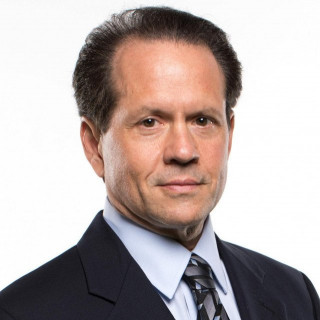
Jack G. Bernstein, Esq. has been protecting the rights of injured victims and their families for over 40 Years.
What Our Clients Say
I just wanted to give a special thanks to Jack Bernstein and his team. I now have had to use Mr. Bernstein for a second time, and I can’t stress enough how supportive, caring and just such a huge open communication his team offers and as well as Mr. Bernstein. He is quite the powerhouse of an attorney and will have his client’s best interest. Day or Night Mr. Bernstein will answer his personal cell phone and has always gotten back to me in a timely manner. I want to sincerely thank Jack Bernstein for going up to bat for me, not once but twice. He is truly in the right field of practice and he has just been extremely genuine to me and my family. I can’t thank you enough Jack Bernstein. If you were facing a slip and fall, I highly recommend Jack and his team. He will deliver nothing short of what you are entitled to and what you deserve.
– Shane E Bishop
If Your Crash Just Happened
The first days after a motorcycle crash decide what evidence exists later. Two things tend to disappear fast: the physical scene and your own words.
If you are able, do these before anything else.
- Get evaluated, even if you feel fine. Adrenaline masks injuries, and a gap between the crash and your first medical visit becomes the insurer’s argument that you were not really hurt. A documented exam closes that gap.
- Photograph everything. The bike, the other vehicle, the road surface, skid marks, lighting, signage, and any debris. Road-hazard and visibility evidence degrades within days.
- Get names. Witnesses leave, and a Las Vegas crash often involves tourists who are gone by the weekend. A name and number now is worth more than a perfect memory later.
There is one thing not to do: do not give the at-fault driver’s insurance company a recorded statement.
An adjuster will often call within 24 to 48 hours, friendly and asking how you are doing. The questions are not small talk. “How fast were you going?” “Were you wearing a helmet?” “Were you splitting lanes?” Each answer is recorded and later used to build a fault percentage against you. You are not required to give that statement, and there is rarely a reason to before you understand how the questions will be used.
Bottom line: Document the scene and your injuries in the first days, and decline the recorded statement until you have advice. What you preserve, and what you decline to say, in week one is what moves your recovery later.
Can You Recover If the Insurer Says You Caused It?
Yes. Being assigned some fault does not end a Nevada motorcycle claim. Whether it bars recovery depends on one threshold, and most riders sit well under it.
Nevada follows modified comparative negligence under NRS 41.141. The statute says your own negligence “does not bar a recovery if that negligence was not greater than the negligence or gross negligence of the parties to the action against whom recovery is sought.” In plain terms: you can recover as long as your share of fault does not exceed the other side’s. If your fault is found to be greater (more than half), you recover nothing. If it is at or below that line, you still recover, but your award is reduced by your percentage.
This is why insurers fight so hard over fault percentages. The whole game is to push your number up toward, and past, that line. Commentators often shorthand the rule as the “51% bar,” and that is a fair description of the result, but the statute itself never uses the number “51%.” It uses “not greater than.” The distinction matters, because the comparison is not a fixed percentage; it is your fault weighed against everyone else’s.
Here is what that comparison looks like:
| Your share of fault | What happens to your recovery |
|---|---|
| 0% | Full damages |
| 1%–50% (at or below the other side’s combined fault) | You recover, reduced by your percentage |
| Greater than the combined fault of the parties you sue | Recovery barred: you receive nothing |
The second column hides the most important point, and it is the one carriers least want a rider to understand: your fault is compared to the combined fault of everyone you are suing, not to a single driver. NRS 41.141 instructs the jury to weigh the plaintiff’s negligence against “the combined negligence of multiple defendants.” If a car turned left across your path and a poorly maintained road or a defective component also contributed, your fault is measured against all of them together. That total is usually larger than any one defendant’s share, which leaves a partially-at-fault rider more room to recover than the insurer’s framing suggests.
What this means for you: When the adjuster’s story is “you were 60% at fault, so you get nothing,” the real question is whether anyone else shares the blame. Each additional responsible party raises the combined fault you are measured against, and can pull you back under the line.
How the Comparative-Fault Argument Is Built Against Riders
The fault percentage is not handed down by a court at the scene. It is argued, and the insurer builds its version early. Understanding the moves lets you see them coming.
The core tactic is comparative-negligence inflation: exaggerating the rider’s share of fault to either clear the recovery bar entirely or shave down the payout. On a motorcycle, three arguments do most of the work:
- Speed. Hard to prove without evidence, easy to assert. Scene photos, signal timing, and the other vehicle’s damage often rebut it.
- Conspicuity: the claim that the rider was “invisible” or “came out of nowhere.” This shifts a driver’s failure to look onto the rider. Witness accounts and the geometry of the crash (a left-turn-across-path collision, for example) usually put the duty back where it belongs.
- Helmet and lane position. These get their own section below, because they are the arguments most riders assume are fatal and most often are not.
None of these is a verdict. Each is a position the other side takes, and each has a standard rebuttal. The reason to preserve evidence early (the section above) is precisely that these arguments are won or lost on what the scene shows.
Bottom line: “You were at fault” is an opening position, not a finding. The evidence you preserve is what answers it.
The Helmet and Lane-Position Arguments, and How They Are Rebutted
These are the two arguments that make riders assume their case is over before it starts. Neither does what the insurer wants you to think it does.
The Helmet Argument
Nevada has a universal helmet law. NRS 486.231 requires that “when any motorcycle or moped is being driven on a highway, the driver and passenger shall wear protective headgear securely fastened on the head” meeting state standards. It applies to every rider, regardless of age.
So if you were not wearing a helmet, or it was not properly fastened, the insurer will raise it. But notice what the argument can and cannot reach:
- It does not prove you caused the crash. Failing to wear a helmet has nothing to do with who ran the light or turned across your lane. Crash-causation fault is a separate question.
- It reaches the severity of certain injuries, and in practice, that means head injuries. The argument is that a helmet would have reduced specific harm, so the rider should bear part of that specific cost.
- It does not touch injuries a helmet would not have prevented. A shattered leg, a degloving injury, internal trauma: helmet use is irrelevant to those, and a carrier that tries to discount them with the helmet argument is overreaching.
In other words, helmet non-use is a damages-mitigation argument aimed at a slice of the claim, not a switch that turns the whole case off. It still has to run through the same comparative-fault math from the section above: it only bars recovery if it pushes your total share past the combined fault of the people you are suing, which it rarely does on its own.
The Lane-Position Argument
Lane splitting (riding between moving or stationary cars in adjacent lanes) is illegal in Nevada. NRS 486.351 provides that a person “shall not drive a motorcycle or moped between moving or stationary vehicles occupying adjacent traffic lanes.” If you were splitting lanes, expect the carrier to lead with it.
But the same statute and the rules around it give a rider real ground to stand on:
- A motorcycle is entitled to a full traffic lane. A driver who drifted into your lane or squeezed you to the line does not get to relabel that as your lane-splitting.
- Nevada expressly allows two motorcycles to ride abreast in a single lane by consent. Riding near another bike is not the same as splitting lanes between cars.
- Even where lane splitting did occur, it goes into the comparative-fault analysis as a percentage. It is not an automatic bar. The other driver’s conduct still counts.
What this means for you: If the first thing the insurer mentions is your helmet or your lane position, that is usually a sign the underlying liability is uncomfortable for them. These arguments narrow what you recover at the margins; they rarely decide the case.
Common Causes of Las Vegas Motorcycle Crashes
Most motorcycle crashes in the valley fall into a handful of patterns, and the cause usually points to who shares fault. The hub covers these at a glance; each links to a deeper treatment.
- Left-turn-across-path collisions. A driver turns left across an oncoming motorcycle, often claiming they “never saw” the rider. The driver’s duty to yield does not disappear because a motorcycle is smaller. The question of whether one driver can be held responsible is covered in whether you can sue the other driver for causing your motorcycle accident.
- Lane-change and blind-spot crashes. A car merges into an occupied lane. The full-lane entitlement above is central here.
- Road hazards. Gravel, potholes, debris, and poorly maintained surfaces affect a motorcycle far more than a car, and they can put a government entity or contractor into the case. See motorcycle accidents involving road hazards.
- Other recurring causes. Several crash types recur often enough to track as a group; the three common causes of motorcycle accidents in Las Vegas walks through them.
Evidence is what converts a “cause” into a fault percentage. If you ride with a helmet camera, that footage can be decisive, and how to preserve and use it is covered in helmet cameras and motorcycle accident claims.
Motorcycle crashes share the road-rules framework with other vehicle collisions; the broader treatment lives on the Las Vegas car accident lawyers page.
The Insurance Layers That Decide What You Recover
Two riders with identical injuries can walk away with very different amounts, and the reason is usually coverage, not fault. A motorcycle claim often draws on more than one policy, and carriers are not in the habit of volunteering the ones that help you.
Start with the floor. Nevada’s minimum liability coverage under NRS 485.185 is $25,000 for injury to one person, $50,000 for two or more people, and $20,000 for property damage, commonly written as 25/50/20. That is the most the at-fault driver’s basic policy is required to pay. Serious motorcycle injuries routinely exceed it, which is where the other layers matter.
| Coverage layer | Who pays | When it matters |
|---|---|---|
| At-fault driver’s liability (25/50/20 minimum) | The other driver’s insurer | The first source; often too small for serious injuries |
| Your uninsured / underinsured motorist (UM/UIM) | Your own insurer | The at-fault driver has no coverage or not enough |
| Medical payments (MedPay) | Your own insurer | Early medical bills, regardless of fault |
Nevada law works in your favor on the second layer. Under NRS 687B.145, insurers writing motorcycle policies must offer uninsured and underinsured coverage “in an amount equal to the limits of coverage for bodily injury,” and the statute names motorcycles specifically. UM/UIM lets you recover up to your own limits when the at-fault driver cannot cover what you are owed. The same statute requires an offer of at least $1,000 in medical-payments coverage for motorcycle policies. Many riders carry these and do not realize it, because no one is incentivized to remind them.
What this means for you: Before you accept that the at-fault policy is “all there is,” your own policy should be read for UM/UIM and MedPay. The layer that closes the gap is frequently one the other carrier never mentions.
Common Mistakes That Sink a Motorcycle Claim
The fastest way to lose a recoverable claim is not a bad crash. It is a predictable mistake in the weeks after it. These are the ones that do the most damage.
- Assuming any fault means no case. This is the single most expensive misconception. Partial fault reduces recovery; it does not erase it unless your share exceeds the combined fault of everyone you sue.
- Believing “no helmet, no case.” As above, helmet non-use is a limited damages argument, not a bar. Riders who accept this framing often never call anyone.
- Giving a recorded statement. The friendly early call is an evidence-collection event. Answers about speed, helmet use, and lane position are recorded to build fault against you.
- Taking the first offer. A quick settlement before your injuries have fully declared themselves (and before future medical costs are known) typically comes with release language that closes the door on everything else, even if you get worse.
- Waiting too long. The two-year deadline below is firm. Riders who “wait to see how it heals” can find the claim gone.
Bottom line: Most lost motorcycle claims are lost by default (accepting the insurer’s framing, signing too early, or waiting too long), not by losing on the facts.
Is Your Case a Fit, and Is This the Right Firm?
Not every situation needs a lawyer, and not every firm handles motorcycle cases with the seriousness they require. Here is how to sort both.
A motorcycle claim is generally worth professional evaluation when:
- You were injured, and the injuries needed more than first aid.
- Anyone (the other driver, a carrier, a police report) is assigning you fault.
- More than one party may have contributed (another driver, a road authority, a parts maker).
- The at-fault driver was uninsured or carried only the state minimum.
Some situations are weaker, and an honest assessment says so. A claim is harder, or may not be worth pursuing, when:
| The case is likely a fit when… | It is weaker or may not be when… |
|---|---|
| You have documented injuries beyond minor scrapes | Damage is property-only or injuries are negligible |
| Another party shares the blame | You were the sole cause and no one else contributed |
| You are within the two-year deadline | The deadline has already passed |
| The crash happened in Nevada | The crash and all parties are outside Nevada’s jurisdiction |
When you do evaluate a firm, the question is not the size of its billboard. Ask whether the firm treats motorcycle cases as their own category rather than “just another car accident,” because the helmet, lane-position, and bias arguments above are specific to riders, and a firm that does not anticipate them will not rebut them. Ask who actually handles your file. Ask how they preserve and use crash evidence.
The Two-Year Deadline
Nevada gives you two years from the date of injury to file a personal injury lawsuit. The deadline comes from NRS 11.190(4)(e), which sets a two-year limit for “an action to recover damages for injuries to a person… caused by the wrongful act or neglect of another.”
That deadline is firm. There are narrow exceptions, but no rider should count on one. Evidence also does not wait for the deadline: scene conditions change, vehicles are repaired or scrapped, and witnesses scatter. The practical window to build a strong claim is much shorter than two years, even though the legal one is not.
What this means for you: If your crash was anywhere near two years ago, the deadline, not the strength of your case, is the thing that can end it. The earlier the evidence is locked down, the more there is to work with.
Frequently Asked Questions
Can I recover compensation if I was partly at fault for my motorcycle crash in Nevada?
Yes. Nevada uses modified comparative negligence under NRS 41.141. You can recover as long as your share of fault is not greater than the combined fault of the parties you are suing. If you are at or below that line, your recovery is reduced by your percentage; if your fault is greater, recovery is barred. Because your fault is compared to all defendants combined, partially-at-fault riders often have more room to recover than an insurer suggests.
Does not wearing a helmet ruin my motorcycle accident claim in Nevada?
No. Nevada requires a helmet under NRS 486.231, and an insurer can argue that not wearing one made certain injuries worse, usually head injuries. But that argument goes to the severity of specific injuries, not to who caused the crash, and it does not affect injuries a helmet would not have prevented. It rarely bars recovery on its own.
Is lane splitting legal in Nevada?
No. NRS 486.351 prohibits riding a motorcycle between moving or stationary vehicles in adjacent lanes. If you were splitting lanes, it can count as comparative fault. However, a motorcycle is entitled to a full lane, and two motorcycles may ride abreast in one lane by consent, so lane-position accusations are often rebuttable, and lane splitting is not an automatic bar to recovery.
How long do I have to file a motorcycle accident lawsuit in Las Vegas?
Two years from the date of injury, under NRS 11.190(4)(e). Missing the deadline generally ends the claim no matter how strong it is. Because evidence degrades long before two years pass, the practical window to build a claim is shorter than the legal one.
What if the driver who hit me did not have enough insurance?
Nevada’s minimum liability coverage is just 25/50/20 under NRS 485.185, which serious injuries often exceed. Under NRS 687B.145, insurers must offer uninsured/underinsured motorist (UM/UIM) coverage equal to your bodily-injury limits, and the statute applies to motorcycle policies. UM/UIM and MedPay on your own policy can cover the gap when the at-fault driver cannot.
If You Were Injured in Las Vegas
If you ride in Las Vegas, Henderson, Summerlin, Boulder City, or out in Pahrump and you have been hurt in a crash, the bias narrative is the first thing you will face and the last thing you should accept on its own terms. With over 40 years as a personal injury attorney, Jack Bernstein understands how insurers build a fault percentage against a rider, and how the helmet, speed, and lane-position arguments are actually rebutted under Nevada law. Jack is personally involved in every case.
If you are being told the crash was your fault, or that not wearing a helmet ended your claim, Jack Bernstein Injury Lawyers offers a free consultation to evaluate the fault percentages, the coverage layers that apply to your situation, and the deadline you are working against. There are no fees unless we win. Because Nevada’s two-year filing deadline is firm, the sooner your case is reviewed, the more options remain open. Call (702) 633-3333.